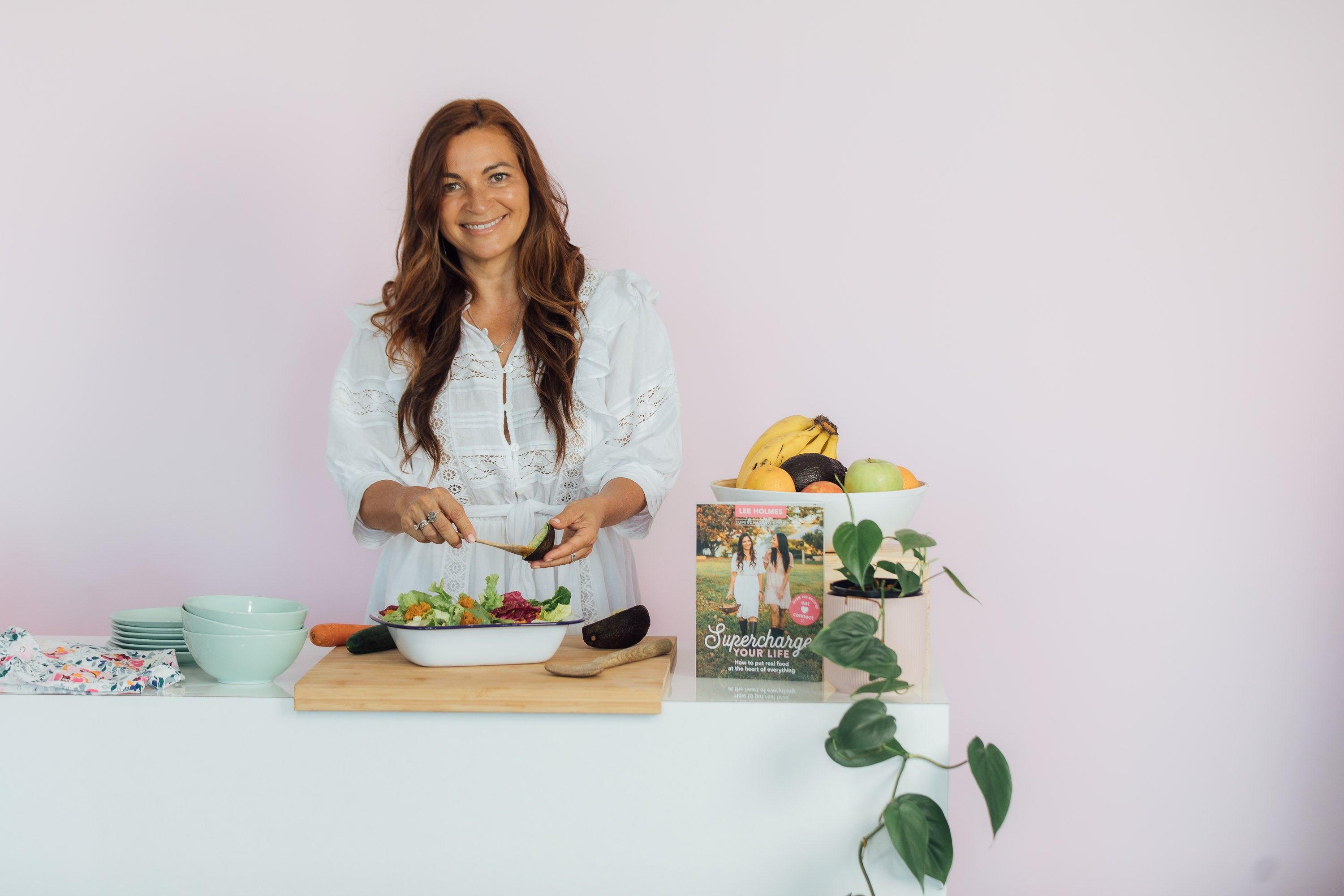
Microbiome Magazine Vol. 4: Full Text
By Lee Holmes, Clinical Nutritionist, author of 12 books and founder of Supercharged Food (since 2010) and Love Your Gut
Microbiome Magazine Vol. 4, The Gut Reset Issue, is Lee Holmes' free guide to resetting your gut the gentle way. Inside: why a gut reset doesn't mean starving yourself, five gut health fads to skip, how probiotics, prebiotics and synbiotics work, Lee's three-step gut reset protocol, a Q&A with gut health doctor Dr Christine Bishara, and five colourful recipes.
Get the full magazine free: the complete illustrated issue, including the puzzle pages, is a free PDF. Download Microbiome Magazine Vol. 4 and your link arrives by email straight away.
In this issue
- A letter from Lee
- Why reset your gut?
- Gut health: the relationship reboot
- Fact vs fiction: the truth about gut reset trends
- 5 gut health fads to sidestep
- Probiotics, prebiotics and synbiotics explained
- Lee's 3-step gut reset protocol: remove, rebuild, re-energise
- 8 questions with Dr Christine Bishara
- Recipes
- Gut reset questions, answered
A letter from Lee
Welcome to the latest issue of Microbiome Magazine, packed with gut health science and delicious inspiration. As a clinical nutritionist, I love sharing my own routines, the protocols I use with clients and the latest research.
In this issue we explore why gut health is the trendiest relationship reboot, cut through gut reset fads to find what's real, and break down which probiotic strains and fibres make a difference. Don't miss our conversation with Dr Christine Bishara MD on gut health and practical reset advice. Plus there are tasty recipes and a puzzle to keep your gut and mind engaged.
Let's raise a herbal tea to blooming gut health and the joyful adventure of self-care.
Lee x
Why reset your gut?
Feeling sluggish, bloated or tired after a busy few months? You're not alone. A gentle gut reset is something I do myself every year, and it's one of the best gifts you can give yourself. No starvation, no celery juice marathons, no drama.
A gut reset is about giving less room to the foods that don't serve your gut (refined sugar, ultra-processed food and too much saturated fat) and more to the ones that do: colourful, fibre-rich vegetables, yoghurt and kefir, legumes, lean protein and plenty of water. My mornings start with herbal tea and a brisk walk, my non-negotiables for gut and mind alike.
The science is exciting
Australian researchers at the Hudson Institute and Monash University have uncovered hundreds of previously unknown viruses that live inside gut bacteria, and University of Sydney researchers have shown how our own genes help prune the gut microbiome. Your inner ecosystem is more complex, and more fascinating, than anyone guessed. And because of the gut-brain axis, looking after your gut is also about mood, focus and how you feel day to day.
How to start a realistic gut reset
- Plan tasty, colourful, high-fibre meals.
- Add probiotic-rich foods such as yoghurt, kefir, sauerkraut and kimchi.
- Drink plenty of water and herbal tea.
- Make time for daily walks and real sleep.
- Skip extreme detoxes and sludge-coloured smoothies.
Gut health: the relationship reboot
Move over, couples' massages. More couples are doing a gut reset together, and it makes sense: you shop together, cook together and keep each other on track. Research shows people who live together share more of their gut bacteria, so changing the menu at home changes both your microbiomes.
Doing it as a team means joint trips to the markets, playful kitchen experiments and support through the cravings. Many couples find that better sleep, more energy and less digestive discomfort leave more room for fun, connection and date nights.
Fact vs fiction: the truth about gut reset trends
With gut health so popular, it's easy to dive into myths and miracle promises. Real gut resets aren't about deprivation; they're about nourishment.
I'll never forget a client who arrived convinced that a strict juice cleanse was her only path to better health. After a week, her energy was at rock bottom. We swapped the juice for nourishing, fibre-rich meals, and she soon felt like herself again.
Lifestyle is key
Diet matters most, but hydration, sleep and stress management count too. Consistent, balanced choices beat quick fixes every time. Even my dog Oscar insists on a daily walk, and my gut thanks me for it.
5 gut health fads to sidestep
-
Extreme detoxes and juice cleanses that leave your gut bacteria (and you) underfed.
-
Probiotic drinks on top of a fast-food diet. New microbes need fibre and real food to thrive.
-
Blanket elimination diets without a plan to bring foods back, which can leave nutritional gaps.
-
DIY faecal transplants. Please never try this at home.
-
Banning every processed food overnight. Aim for quality, not perfection; a little real-life flexibility keeps you on track.
Probiotics, prebiotics and synbiotics explained
What are probiotics?
Probiotics are live beneficial microbes. Some of the most widely studied strains include Lactobacillus acidophilus, Bifidobacterium bifidum, Bifidobacterium longum, Lactococcus lactis and Lactobacillus brevis. You'll find live microbes in fermented foods such as yoghurt, kefir, sauerkraut and kimchi.
What are prebiotics?
Prebiotics are fibres you can't digest that feed your good gut bacteria. Key examples include:
-
Acacia fibre: a soluble fibre from the acacia tree that ferments slowly in the gut, so it tends to be gentle and well tolerated.
-
Inulin: found in onions, garlic, leeks, chicory and Jerusalem artichokes.
-
Resistant starch: found in green bananas and cooked-and-cooled potatoes and rice; your bacteria turn it into butyrate, a key fuel for the cells lining your colon.
What is a synbiotic?
A synbiotic combines probiotics with the prebiotics that feed them. Studies suggest synbiotic combinations can shift gut bacteria more than probiotics or prebiotics alone (1). Love Your Gut Synbiotic is a powder that combines probiotic strains with acacia prebiotic fibre, digestive enzymes, and fruits such as acerola cherry and Kakadu plum.
Easy ways to add good gut bugs to your day
-
Smoothies: blend fruit, a spoonful of yoghurt or kefir and a sprinkle of flaxseed.
-
Yoghurt bowls: top yoghurt with chia, flaxseed and berries.
-
Overnight oats: oats are a prebiotic powerhouse; add kefir or yoghurt.
-
Synbiotic powder: if you use Love Your Gut Synbiotic, stir it into cold drinks, yoghurt or oats once they've cooled, as heat can affect live cultures.
Lee's 3-step gut reset protocol: remove, rebuild, re-energise
A gut reset shouldn't be about starvation. This is the opposite of a harsh detox: it's a protocol of abundance, not restriction. Think of your gut as a garden. You can't plant new seeds in tired, overgrown soil and expect it to flourish. First you clear the weeds, then you plant, then you nourish.
Step 1: Remove
Gently clear the way by cutting back on the things that make life hard for your gut: ultra-processed food, refined sugar, excess alcohol and, if you're sensitive, any foods that don't agree with you. Keep your water up, and add plenty of fibre-rich vegetables.
This is the stage where I add Love Your Gut Diatomaceous Earth to a glass of water first thing in the morning, and a few drops of Love Your Gut Fulvic Humic Concentrate to my water bottle through the day.
Step 2: Rebuild
Now plant the seeds: add fermented foods such as yoghurt, kefir, sauerkraut and kimchi, and feed them with prebiotic foods such as onions, garlic, leeks, oats, legumes and slightly green bananas. I add Love Your Gut Synbiotic to a cold smoothie at this stage too.
Step 3: Re-energise
Keep your new microbial garden thriving with a wide variety of plants (aim for 30 a week), good-quality protein, sleep, movement and stress care. A daily smoothie makes it easy: I add a scoop of Love Your Gut Vegan Protein + Fibre Powder or Supercharged Greens, Mushrooms, Protein and Adaptogens.
A simple daily plan
-
On waking: a glass of water (with Love Your Gut Diatomaceous Earth, if you use it). Wait about 30 minutes before eating.
-
Breakfast: a smoothie with fruit, plant milk and your choice of synbiotic, protein + fibre or greens powder, or one of the recipes below.
-
Through the day: plenty of water, with a few drops of Fulvic Humic Concentrate if you like.
-
Meals: colourful plants, legumes, wholegrains, quality protein and a fermented food.
The Gut Health Starter Bundle brings the Love Your Gut Diatomaceous Earth, Fulvic Humic Concentrate and Synbiotic together.
8 questions with Dr Christine Bishara
Dr Christine Bishara MD is a physician, author of The Gut Revolution and founder of From Within Medical.
What inspired you to specialise in gut health?
"My personal journey with my weight as a teenager played a big role in helping me appreciate the role our body plays in healing. The gut is where it all starts. Having inadvertently discovered intermittent fasting and seen its effects on me physically and mentally, I became intrigued by natural healing and wellness."
What did your research find about Bifidobacterium?
"My husband, an ICU physician, had been seeing the sickest of patients, and they all had very high inflammatory markers. Conversely, children were getting very mild illnesses. I had a strong suspicion the protective factor was in their gut. We found they had high levels of a beneficial gut bacteria called Bifidobacterium, which works on down-regulating the same inflammatory pathways. Several other studies since have shown similar findings."
What's most rewarding about working with patients on a gut reset?
"The gut microbiome can change for the healthier in as little as a month. The most challenging part is convincing patients that diet and lifestyle changes really can make a difference. Will some people need medication? Yes, but I always start with lifestyle first."
What symptoms prompt you to recommend a gut reset?
"Common signs include bloating, new sensitivities to foods such as lactose, gluten or nuts, unexplained weight gain, constipation, or new skin issues. When I say 'gut reset', I don't mean drastic detoxes or prolonged water fasts. It's simple changes: restricting eating times, eating a greater diversity of fibre-rich foods such as vegetables, fruits and beans, and adding healthy oils such as olive oil. Even social connections help."
What are your top three tips for a resilient gut microbiome?
"Diversify: aim for at least 30 different plant foods a week. Give your gut a break: keep an eating window of at least 12 hours overnight. And maintain strong social connections, because stress affects the gut."
How do you personalise gut health plans?
"Everyone is different. I look at each person's individual profile, often use food logs to see which foods bring on symptoms, and sometimes look at stool analysis. What we've seen is that the more diversity of beneficial strains, the healthier the gut."
How do you keep up with the research?
"I'm always reading the latest research, because gut science is still evolving. Even the experts are learning new things."
What's the most important habit for someone starting a gut reset?
"Feed them first what they like, the trillions of little guys in your gut, and then feed yourself what you like."
Recipes
Blueberry and Basil Smoothie Bites
Makes 24. Frozen, fruity, gluten-free and dairy-free snacks.
- 1 cup frozen blueberries
- 1 cup frozen dragon fruit (pitaya)
- 1 cup coconut milk
- 2 tablespoons coconut yoghurt
- 1 tablespoon chia seeds
- 6 basil leaves and a pinch of sea salt
- 2 tablespoons Love Your Gut Diatomaceous Earth (optional)
- Coconut oil spray and sugar-free granola, to finish
Blend everything until smooth. Spray a 24-hole silicone mould with coconut oil, pour in the mixture, top with granola if you like and freeze for 1 to 2 hours.
Dragon Fruit and Berry Bowl
Serves 2 to 4. A tropical, vegan breakfast bowl.
- 2 cups frozen dragon fruit, 1 cup frozen mango, 1 cup frozen blueberries and 1 frozen banana
- 1 tablespoon flaxseed meal
- 1 cup canned coconut milk
- 1 tablespoon Love Your Gut Synbiotic (optional)
- To serve: coconut flakes, granola, blueberries and passionfruit
Blend until thick and smooth, adding a little more milk if needed. Spoon into bowls and add the toppings.
Rainbow Rice Paper Rolls
Makes 10. A rainbow of fresh vegetables and herbs with a nutty dipping sauce.
- 10 rice paper sheets
- 6 small lettuce leaves, finely sliced
- 100 g brown rice vermicelli, cooked and cooled
- 1 cucumber, 1 carrot, 1 red and 1 yellow capsicum, cut into thin batons
- ¼ red cabbage, shredded
- ½ bunch each mint and coriander, chopped
- ½ cup macadamias, finely chopped
-
Dipping sauce: ½ cup water, 2 tablespoons tamari, 1 tablespoon honey, 1 tablespoon sweet paprika, ½ tablespoon nut butter, 2.5 cm piece ginger (grated) and 1 garlic clove (minced)
Whisk the sauce ingredients together. Soak one rice paper sheet at a time in warm water, lay it on a damp board and layer lettuce, noodles, vegetables, herbs and macadamias along one side. Roll up, folding in the sides. Halve and serve with the sauce.
Ginger Salmon Rice Bowl
Serves 2. Omega-3-rich salmon with kale, red cabbage and a ginger-tamari glaze.
- 2 teaspoons extra virgin olive oil
- 2 salmon fillets, cut into chunks
- 1 cup shredded red cabbage and 1 small bunch kale, shredded
- 2 cups cooked brown rice (cooked and cooled rice adds resistant starch)
- ¼ cup chopped basil and 1 grated carrot
-
Marinade: 2.5 cm piece ginger (grated), 4 tablespoons sesame oil, 4 tablespoons tamari, 2 tablespoons honey and 1 tablespoon sesame seeds
Whisk the marinade. Brown the salmon in most of the oil for 2 to 3 minutes, then add most of the marinade and simmer for 3 to 4 minutes until cooked. Cook the cabbage and kale in the remaining oil. Toss the rice with the greens, basil and a little reserved marinade, divide between bowls and top with carrot and salmon.
Passionfruit and Peach Chia Pudding
Serves 2. Make it the night before for an easy breakfast.
- ¼ cup chia seeds
- 1 cup coconut milk
- 2 tablespoons maple syrup
- Pulp of 1 passionfruit and ½ peach, diced
- To serve: pulp of 1 passionfruit and ¼ cup chopped brazil nuts
Mix the chia, coconut milk, maple syrup, passionfruit and peach. Divide between two glasses, cover and refrigerate overnight. Top with passionfruit and brazil nuts.
Gut reset questions, answered
What is a gut reset?
A gut reset is a period of eating and living in a way that supports your gut bacteria: less ultra-processed food, sugar and alcohol, and more fibre, plants, fermented foods, water, sleep and movement. It isn't a juice cleanse or a fast.
How long does it take to reset your gut?
Research shows gut bacteria can start to shift within days of changing your diet, and meaningful changes can build over a month or so. Lasting results come from keeping the habits up.
What's the difference between probiotics, prebiotics and synbiotics?
Probiotics are live beneficial microbes, prebiotics are the fibres that feed them, and synbiotics combine the two.
What should I eat during a gut reset?
Plenty of colourful vegetables and fruit, legumes, wholegrains, nuts and seeds, quality protein and fermented foods such as yoghurt, kefir and sauerkraut, with lots of water.
About Lee Holmes
Lee Holmes, Clinical Nutritionist, author of 12 books and founder of Supercharged Food (since 2010) and Love Your Gut. Lee's latest book is Eat to Heal, and she co-hosts The Lee and Irene Show podcast with Clean Nectarine founder Irene Falcone. Read more about Lee.
Download your free copy: get the full illustrated Microbiome Magazine Vol. 4 as a free PDF. Catch up on Vol. 3, read Vol. 5 next, or browse the Microbiome Magazine library.
Selected references
- Swanson KS et al. (2020). The International Scientific Association for Probiotics and Prebiotics (ISAPP) consensus statement on the definition and scope of synbiotics. Nature Reviews Gastroenterology & Hepatology 17: 687–701. doi:10.1038/s41575-020-0344-2
- Hudson Institute of Medical Research. New human gut virus discoveries open new paths to studying the microbiome. hudson.org.au
- University of Sydney (2025). Genes prune gut microbiome to protect from chronic disease. sydney.edu.au
- Dill-McFarland KA et al. (2019). Close social relationships correlate with human gut microbiota composition. Scientific Reports 9: 703. nature.com
- UCLA Health. Resetting gut microbiome is a long-term project. uclahealth.org
- Harvard Health Publishing. 5 simple ways to improve gut health. health.harvard.edu
This magazine shares general information about food and lifestyle. It isn't medical advice; talk to your healthcare practitioner about your own health.
By Lee Holmes, Clinical Nutritionist, author of 12 books and founder of Supercharged Food (since 2010) and Love Your Gut
Microbiome Magazine Vol. 4, The Gut Reset Issue, is Lee Holmes' free guide to resetting your gut the gentle way. Inside: why a gut reset doesn't mean starving yourself, five gut health fads to skip, how probiotics, prebiotics and synbiotics work, Lee's three-step gut reset protocol, a Q&A with gut health doctor Dr Christine Bishara, and five colourful recipes.
Get the full magazine free: the complete illustrated issue, including the puzzle pages, is a free PDF. Download Microbiome Magazine Vol. 4 and your link arrives by email straight away.
In this issue
- A letter from Lee
- Why reset your gut?
- Gut health: the relationship reboot
- Fact vs fiction: the truth about gut reset trends
- 5 gut health fads to sidestep
- Probiotics, prebiotics and synbiotics explained
- Lee's 3-step gut reset protocol: remove, rebuild, re-energise
- 8 questions with Dr Christine Bishara
- Recipes
- Gut reset questions, answered
A letter from Lee
Welcome to the latest issue of Microbiome Magazine, packed with gut health science and delicious inspiration. As a clinical nutritionist, I love sharing my own routines, the protocols I use with clients and the latest research.
In this issue we explore why gut health is the trendiest relationship reboot, cut through gut reset fads to find what's real, and break down which probiotic strains and fibres make a difference. Don't miss our conversation with Dr Christine Bishara MD on gut health and practical reset advice. Plus there are tasty recipes and a puzzle to keep your gut and mind engaged.
Let's raise a herbal tea to blooming gut health and the joyful adventure of self-care.
Lee x
Why reset your gut?
Feeling sluggish, bloated or tired after a busy few months? You're not alone. A gentle gut reset is something I do myself every year, and it's one of the best gifts you can give yourself. No starvation, no celery juice marathons, no drama.
A gut reset is about giving less room to the foods that don't serve your gut (refined sugar, ultra-processed food and too much saturated fat) and more to the ones that do: colourful, fibre-rich vegetables, yoghurt and kefir, legumes, lean protein and plenty of water. My mornings start with herbal tea and a brisk walk, my non-negotiables for gut and mind alike.
The science is exciting
Australian researchers at the Hudson Institute and Monash University have uncovered hundreds of previously unknown viruses that live inside gut bacteria, and University of Sydney researchers have shown how our own genes help prune the gut microbiome. Your inner ecosystem is more complex, and more fascinating, than anyone guessed. And because of the gut-brain axis, looking after your gut is also about mood, focus and how you feel day to day.
How to start a realistic gut reset
- Plan tasty, colourful, high-fibre meals.
- Add probiotic-rich foods such as yoghurt, kefir, sauerkraut and kimchi.
- Drink plenty of water and herbal tea.
- Make time for daily walks and real sleep.
- Skip extreme detoxes and sludge-coloured smoothies.
Gut health: the relationship reboot
Move over, couples' massages. More couples are doing a gut reset together, and it makes sense: you shop together, cook together and keep each other on track. Research shows people who live together share more of their gut bacteria, so changing the menu at home changes both your microbiomes.
Doing it as a team means joint trips to the markets, playful kitchen experiments and support through the cravings. Many couples find that better sleep, more energy and less digestive discomfort leave more room for fun, connection and date nights.
Fact vs fiction: the truth about gut reset trends
With gut health so popular, it's easy to dive into myths and miracle promises. Real gut resets aren't about deprivation; they're about nourishment.
I'll never forget a client who arrived convinced that a strict juice cleanse was her only path to better health. After a week, her energy was at rock bottom. We swapped the juice for nourishing, fibre-rich meals, and she soon felt like herself again.
Lifestyle is key
Diet matters most, but hydration, sleep and stress management count too. Consistent, balanced choices beat quick fixes every time. Even my dog Oscar insists on a daily walk, and my gut thanks me for it.
5 gut health fads to sidestep
- Extreme detoxes and juice cleanses that leave your gut bacteria (and you) underfed.
- Probiotic drinks on top of a fast-food diet. New microbes need fibre and real food to thrive.
- Blanket elimination diets without a plan to bring foods back, which can leave nutritional gaps.
- DIY faecal transplants. Please never try this at home.
- Banning every processed food overnight. Aim for quality, not perfection; a little real-life flexibility keeps you on track.
Probiotics, prebiotics and synbiotics explained
What are probiotics?
Probiotics are live beneficial microbes. Some of the most widely studied strains include Lactobacillus acidophilus, Bifidobacterium bifidum, Bifidobacterium longum, Lactococcus lactis and Lactobacillus brevis. You'll find live microbes in fermented foods such as yoghurt, kefir, sauerkraut and kimchi.
What are prebiotics?
Prebiotics are fibres you can't digest that feed your good gut bacteria. Key examples include:
- Acacia fibre: a soluble fibre from the acacia tree that ferments slowly in the gut, so it tends to be gentle and well tolerated.
- Inulin: found in onions, garlic, leeks, chicory and Jerusalem artichokes.
- Resistant starch: found in green bananas and cooked-and-cooled potatoes and rice; your bacteria turn it into butyrate, a key fuel for the cells lining your colon.
What is a synbiotic?
A synbiotic combines probiotics with the prebiotics that feed them. Studies suggest synbiotic combinations can shift gut bacteria more than probiotics or prebiotics alone (1). Love Your Gut Synbiotic is a powder that combines probiotic strains with acacia prebiotic fibre, digestive enzymes, and fruits such as acerola cherry and Kakadu plum.
Easy ways to add good gut bugs to your day
- Smoothies: blend fruit, a spoonful of yoghurt or kefir and a sprinkle of flaxseed.
- Yoghurt bowls: top yoghurt with chia, flaxseed and berries.
- Overnight oats: oats are a prebiotic powerhouse; add kefir or yoghurt.
- Synbiotic powder: if you use Love Your Gut Synbiotic, stir it into cold drinks, yoghurt or oats once they've cooled, as heat can affect live cultures.
Lee's 3-step gut reset protocol: remove, rebuild, re-energise
A gut reset shouldn't be about starvation. This is the opposite of a harsh detox: it's a protocol of abundance, not restriction. Think of your gut as a garden. You can't plant new seeds in tired, overgrown soil and expect it to flourish. First you clear the weeds, then you plant, then you nourish.
Step 1: Remove
Gently clear the way by cutting back on the things that make life hard for your gut: ultra-processed food, refined sugar, excess alcohol and, if you're sensitive, any foods that don't agree with you. Keep your water up, and add plenty of fibre-rich vegetables.
This is the stage where I add Love Your Gut Diatomaceous Earth to a glass of water first thing in the morning, and a few drops of Love Your Gut Fulvic Humic Concentrate to my water bottle through the day.
Step 2: Rebuild
Now plant the seeds: add fermented foods such as yoghurt, kefir, sauerkraut and kimchi, and feed them with prebiotic foods such as onions, garlic, leeks, oats, legumes and slightly green bananas. I add Love Your Gut Synbiotic to a cold smoothie at this stage too.
Step 3: Re-energise
Keep your new microbial garden thriving with a wide variety of plants (aim for 30 a week), good-quality protein, sleep, movement and stress care. A daily smoothie makes it easy: I add a scoop of Love Your Gut Vegan Protein + Fibre Powder or Supercharged Greens, Mushrooms, Protein and Adaptogens.
A simple daily plan
- On waking: a glass of water (with Love Your Gut Diatomaceous Earth, if you use it). Wait about 30 minutes before eating.
- Breakfast: a smoothie with fruit, plant milk and your choice of synbiotic, protein + fibre or greens powder, or one of the recipes below.
- Through the day: plenty of water, with a few drops of Fulvic Humic Concentrate if you like.
- Meals: colourful plants, legumes, wholegrains, quality protein and a fermented food.
The Gut Health Starter Bundle brings the Love Your Gut Diatomaceous Earth, Fulvic Humic Concentrate and Synbiotic together.
8 questions with Dr Christine Bishara
Dr Christine Bishara MD is a physician, author of The Gut Revolution and founder of From Within Medical.
What inspired you to specialise in gut health?
"My personal journey with my weight as a teenager played a big role in helping me appreciate the role our body plays in healing. The gut is where it all starts. Having inadvertently discovered intermittent fasting and seen its effects on me physically and mentally, I became intrigued by natural healing and wellness."
What did your research find about Bifidobacterium?
"My husband, an ICU physician, had been seeing the sickest of patients, and they all had very high inflammatory markers. Conversely, children were getting very mild illnesses. I had a strong suspicion the protective factor was in their gut. We found they had high levels of a beneficial gut bacteria called Bifidobacterium, which works on down-regulating the same inflammatory pathways. Several other studies since have shown similar findings."
What's most rewarding about working with patients on a gut reset?
"The gut microbiome can change for the healthier in as little as a month. The most challenging part is convincing patients that diet and lifestyle changes really can make a difference. Will some people need medication? Yes, but I always start with lifestyle first."
What symptoms prompt you to recommend a gut reset?
"Common signs include bloating, new sensitivities to foods such as lactose, gluten or nuts, unexplained weight gain, constipation, or new skin issues. When I say 'gut reset', I don't mean drastic detoxes or prolonged water fasts. It's simple changes: restricting eating times, eating a greater diversity of fibre-rich foods such as vegetables, fruits and beans, and adding healthy oils such as olive oil. Even social connections help."
What are your top three tips for a resilient gut microbiome?
"Diversify: aim for at least 30 different plant foods a week. Give your gut a break: keep an eating window of at least 12 hours overnight. And maintain strong social connections, because stress affects the gut."
How do you personalise gut health plans?
"Everyone is different. I look at each person's individual profile, often use food logs to see which foods bring on symptoms, and sometimes look at stool analysis. What we've seen is that the more diversity of beneficial strains, the healthier the gut."
How do you keep up with the research?
"I'm always reading the latest research, because gut science is still evolving. Even the experts are learning new things."
What's the most important habit for someone starting a gut reset?
"Feed them first what they like, the trillions of little guys in your gut, and then feed yourself what you like."
Recipes
Blueberry and Basil Smoothie Bites
Makes 24. Frozen, fruity, gluten-free and dairy-free snacks.
- 1 cup frozen blueberries
- 1 cup frozen dragon fruit (pitaya)
- 1 cup coconut milk
- 2 tablespoons coconut yoghurt
- 1 tablespoon chia seeds
- 6 basil leaves and a pinch of sea salt
- 2 tablespoons Love Your Gut Diatomaceous Earth (optional)
- Coconut oil spray and sugar-free granola, to finish
Blend everything until smooth. Spray a 24-hole silicone mould with coconut oil, pour in the mixture, top with granola if you like and freeze for 1 to 2 hours.
Dragon Fruit and Berry Bowl
Serves 2 to 4. A tropical, vegan breakfast bowl.
- 2 cups frozen dragon fruit, 1 cup frozen mango, 1 cup frozen blueberries and 1 frozen banana
- 1 tablespoon flaxseed meal
- 1 cup canned coconut milk
- 1 tablespoon Love Your Gut Synbiotic (optional)
- To serve: coconut flakes, granola, blueberries and passionfruit
Blend until thick and smooth, adding a little more milk if needed. Spoon into bowls and add the toppings.
Rainbow Rice Paper Rolls
Makes 10. A rainbow of fresh vegetables and herbs with a nutty dipping sauce.
- 10 rice paper sheets
- 6 small lettuce leaves, finely sliced
- 100 g brown rice vermicelli, cooked and cooled
- 1 cucumber, 1 carrot, 1 red and 1 yellow capsicum, cut into thin batons
- ¼ red cabbage, shredded
- ½ bunch each mint and coriander, chopped
- ½ cup macadamias, finely chopped
- Dipping sauce: ½ cup water, 2 tablespoons tamari, 1 tablespoon honey, 1 tablespoon sweet paprika, ½ tablespoon nut butter, 2.5 cm piece ginger (grated) and 1 garlic clove (minced)
Whisk the sauce ingredients together. Soak one rice paper sheet at a time in warm water, lay it on a damp board and layer lettuce, noodles, vegetables, herbs and macadamias along one side. Roll up, folding in the sides. Halve and serve with the sauce.
Ginger Salmon Rice Bowl
Serves 2. Omega-3-rich salmon with kale, red cabbage and a ginger-tamari glaze.
- 2 teaspoons extra virgin olive oil
- 2 salmon fillets, cut into chunks
- 1 cup shredded red cabbage and 1 small bunch kale, shredded
- 2 cups cooked brown rice (cooked and cooled rice adds resistant starch)
- ¼ cup chopped basil and 1 grated carrot
- Marinade: 2.5 cm piece ginger (grated), 4 tablespoons sesame oil, 4 tablespoons tamari, 2 tablespoons honey and 1 tablespoon sesame seeds
Whisk the marinade. Brown the salmon in most of the oil for 2 to 3 minutes, then add most of the marinade and simmer for 3 to 4 minutes until cooked. Cook the cabbage and kale in the remaining oil. Toss the rice with the greens, basil and a little reserved marinade, divide between bowls and top with carrot and salmon.
Passionfruit and Peach Chia Pudding
Serves 2. Make it the night before for an easy breakfast.
- ¼ cup chia seeds
- 1 cup coconut milk
- 2 tablespoons maple syrup
- Pulp of 1 passionfruit and ½ peach, diced
- To serve: pulp of 1 passionfruit and ¼ cup chopped brazil nuts
Mix the chia, coconut milk, maple syrup, passionfruit and peach. Divide between two glasses, cover and refrigerate overnight. Top with passionfruit and brazil nuts.
Gut reset questions, answered
What is a gut reset?
A gut reset is a period of eating and living in a way that supports your gut bacteria: less ultra-processed food, sugar and alcohol, and more fibre, plants, fermented foods, water, sleep and movement. It isn't a juice cleanse or a fast.
How long does it take to reset your gut?
Research shows gut bacteria can start to shift within days of changing your diet, and meaningful changes can build over a month or so. Lasting results come from keeping the habits up.
What's the difference between probiotics, prebiotics and synbiotics?
Probiotics are live beneficial microbes, prebiotics are the fibres that feed them, and synbiotics combine the two.
What should I eat during a gut reset?
Plenty of colourful vegetables and fruit, legumes, wholegrains, nuts and seeds, quality protein and fermented foods such as yoghurt, kefir and sauerkraut, with lots of water.
About Lee Holmes
Lee Holmes, Clinical Nutritionist, author of 12 books and founder of Supercharged Food (since 2010) and Love Your Gut. Lee's latest book is Eat to Heal, and she co-hosts The Lee and Irene Show podcast with Clean Nectarine founder Irene Falcone. Read more about Lee.
Download your free copy: get the full illustrated Microbiome Magazine Vol. 4 as a free PDF. Catch up on Vol. 3, read Vol. 5 next, or browse the Microbiome Magazine library.
Selected references
- Swanson KS et al. (2020). The International Scientific Association for Probiotics and Prebiotics (ISAPP) consensus statement on the definition and scope of synbiotics. Nature Reviews Gastroenterology & Hepatology 17: 687–701. doi:10.1038/s41575-020-0344-2
- Hudson Institute of Medical Research. New human gut virus discoveries open new paths to studying the microbiome. hudson.org.au
- University of Sydney (2025). Genes prune gut microbiome to protect from chronic disease. sydney.edu.au
- Dill-McFarland KA et al. (2019). Close social relationships correlate with human gut microbiota composition. Scientific Reports 9: 703. nature.com
- UCLA Health. Resetting gut microbiome is a long-term project. uclahealth.org
- Harvard Health Publishing. 5 simple ways to improve gut health. health.harvard.edu
This magazine shares general information about food and lifestyle. It isn't medical advice; talk to your healthcare practitioner about your own health.