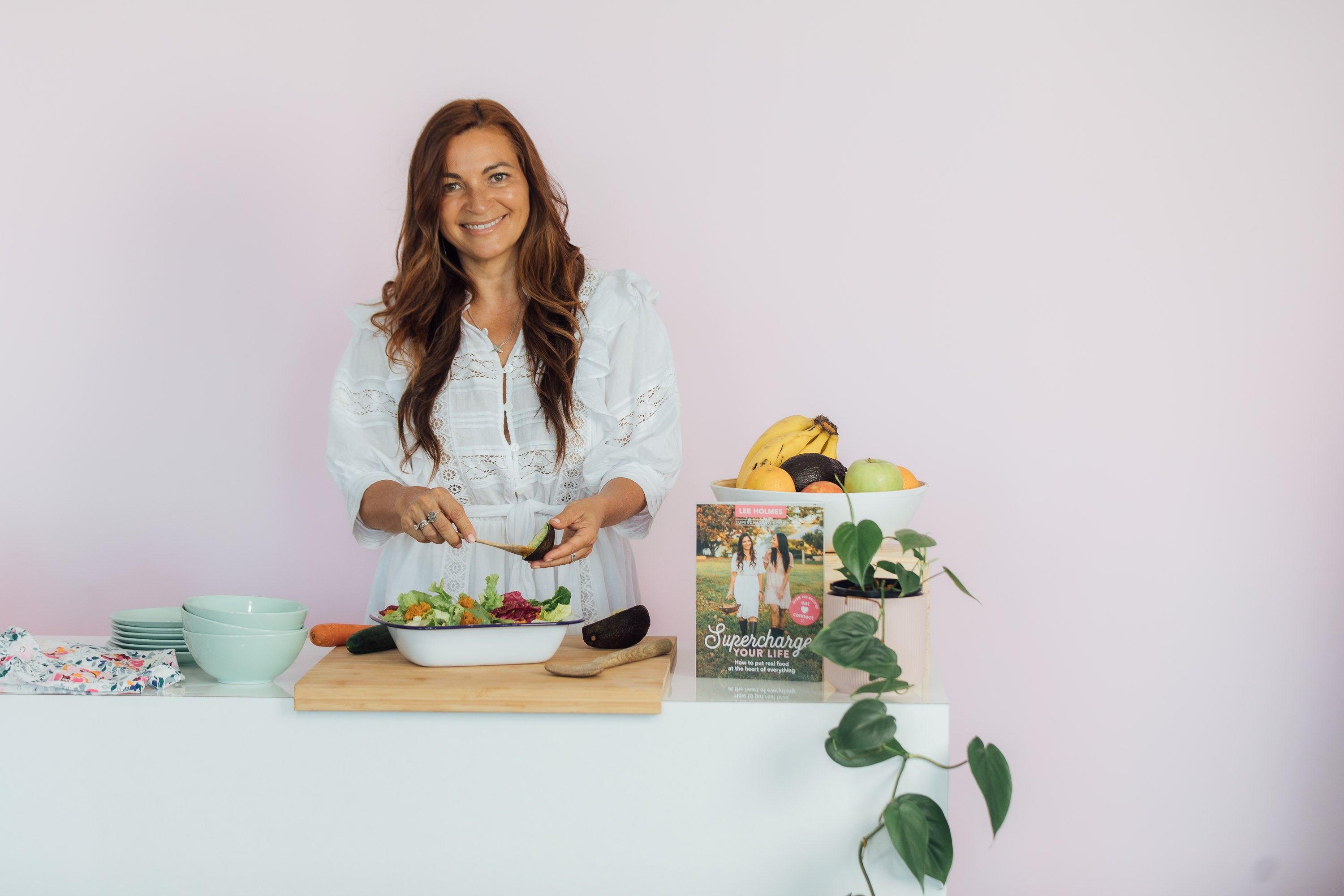
Microbiome Magazine Vol. 3: Full Text
By Lee Holmes, Clinical Nutritionist, author of 12 books and founder of Supercharged Food (since 2010) and Love Your Gut
Microbiome Magazine Vol. 3, The Weighty Issue, is Lee Holmes' free guide to the connection between your gut bacteria and your weight. Inside: how your gut microbiome influences appetite and metabolism, why gut bacteria diversity matters, your gut's daily body clock, how to measure your waist properly, why couples share gut bacteria, and five gut-friendly recipes.
Get the full magazine free: the complete illustrated issue is a free PDF. Download Microbiome Magazine Vol. 3 and your link arrives by email straight away.
In this issue
- A letter from Lee
- How your gut microbiome influences your weight
- Gut bacteria, inflammation and weight
- A day in the life of your gut: your microbiome's body clock
- How to measure your waist, and why it matters
- Do couples share gut bacteria?
- Recipes
- Gut health and weight: your questions answered
A letter from Lee
Hello, and welcome to Issue 3, The Weighty Issue.
This issue explores something that quietly works behind the scenes of your metabolism: your gut microbiome. Why do some people seem to eat anything without their waistband budging, while others find the scales stubborn despite their best efforts? Part of the answer may lie not in willpower, but in the microscopic ecosystem living in your gut.
We'll look at how gut bacteria talk to your appetite, why your microbes have their own body clock, how to measure your waist properly, and the fascinating research showing that couples gradually share their gut bacteria. It's not about restriction or punishment; it's about nourishment and understanding.
So grab a cup of chai and settle in.
Lee x
How your gut microbiome influences your weight
Your gut is a bustling universe of trillions of microbes, and they're in constant conversation with your body, influencing how hungry you feel and how you use the energy in your food.
GLP-1: your gut's own fullness messenger
GLP-1 (glucagon-like peptide-1) is a hormone made by cells in your intestine. It tells your brain you've had enough to eat. When fibre reaches your colon and your bacteria ferment it, the by-products help stimulate your gut to release GLP-1. It's the same pathway that the new weight-loss medications mimic, and your gut makes it naturally when you feed it fibre.
Short-chain fatty acids
When your gut microbes ferment dietary fibre from foods such as Jerusalem artichokes, slightly green bananas and chicory, they produce short-chain fatty acids (SCFAs). Research links SCFAs with better insulin sensitivity, steadier appetite and the way your body uses fat for energy.
Diversity matters
Large studies have found that people with more diverse gut bacteria tend to have healthier weights, and a study of more than 1,600 women found that higher microbial diversity and higher fibre intake were linked with less long-term weight gain (3). Think of your gut like a garden: a varied ecosystem is more resilient than a monoculture.
Cravings: is it you or your microbes?
Researchers have proposed that gut bacteria may influence food cravings. Microbes that thrive on sugar and ultra-processed food may encourage a cycle where the more we eat, the more we want. The good news: as you shift towards fibre-rich whole foods, your gut community shifts too.
Daily habits for a weight-friendly gut
-
Feed your fibre friends. Many of us eat around 18 g of fibre a day, but we should be aiming for at least 25 to 30 g. Variety is key.
-
Add polyphenols. Berries, green tea and extra virgin olive oil are like premium fuel for beneficial bacteria.
-
Look after your gut after antibiotics. They're sometimes necessary, but they can knock your gut bacteria about. Rebuild with fermented foods and prebiotic-rich meals afterwards.
-
Stress less. Your gut microbes are sensitive to stress. Try a few minutes of meditation or a gentle walk.
Gut bacteria, inflammation and weight
When the balance of your gut bacteria tips (dysbiosis), the lining of your gut can become more permeable, letting fragments of bacteria into places they shouldn't be. Research shows this can trigger a low-grade, simmering inflammation, quite different from the obvious kind you get with a sprained ankle. That kind of background inflammation is linked with insulin resistance and with fat being stored around the middle.
Food-first ways to calm the cycle
-
Nourish your gut lining. Bone broth and slow-cooked meats provide glutamine and glycine.
-
Eat the rainbow. Turmeric with black pepper, oily fish rich in omega-3s and colourful berries are anti-inflammatory foods.
-
Feed your friendly bacteria. Prebiotic fibres from Jerusalem artichokes, slightly green bananas and leeks nourish the bacteria that look after your gut lining.
-
Know your triggers. Excess alcohol and ultra-processed foods with emulsifiers can be hard on the gut barrier; some people also find dairy or gluten don't suit them.
Be patient: gut changes are slow and steady rather than dramatic. Measuring progress by how your clothes fit and how you feel is often more revealing than the bathroom scales.
A day in the life of your gut: your microbiome's body clock
Research published in the journal Cell shows that gut bacteria follow daily rhythms, shifting their activity across the day. Getting in sync with that clock is a simple way to support both digestion and metabolism.
Morning, 6 to 9 am
Morning sets the metabolic tone. A warm bowl of porridge with berries and ground flaxseed gives your microbes soluble fibre to work with first thing.
Midday, 12 to 2 pm
Your body handles food well in the middle of the day; studies show the same meal can produce a better blood glucose response at lunch than at dinner. This is a great time for your most varied meal: a colourful salad with lots of different plants and good-quality protein.
Afternoon slump, 3 to 4 pm
Instead of the biscuit tin, try a handful of walnuts with an apple: prebiotics, healthy fats and natural sweetness in one.
Evening, 6 to 8 pm
A lighter, earlier dinner suits your gut as it prepares to rest. A spoonful of sauerkraut on the side adds live microbes.
Overnight, 10 pm to 6 am
Overnight is when your gut lining does much of its repair work. A 12 to 14 hour overnight break (for example, dinner at 7 pm and breakfast at 8 am) gives it time, and research links this kind of eating window with better metabolic health.
Tips for syncing with your gut clock
- Eat at roughly the same times each day.
- Get morning light; a short walk after breakfast is ideal.
- Wind down with chamomile or peppermint tea.
- Take five slow breaths before meals.
- For an easy fibre top-up, add Love Your Gut Vegan Protein + Fibre Powder to your morning smoothie.
How to measure your waist, and why it matters
Where your body stores fat tells a more useful story than the number on the scales. Fat stored deep around your organs (visceral fat) is more metabolically active than the fat just under your skin, and your waist measurement is a simple guide to it.
How to measure your waist
- Find your natural waist, usually just above your belly button.
- Stand comfortably and breathe normally.
- Wrap the tape around, keeping it parallel to the floor.
- Measure after a normal breath out.
Health guidelines suggest that for women, a waist above 80 cm indicates increased risk and above 88 cm substantially increased risk. For men, the figures are 94 cm and 102 cm.
The microbiome connection
Twin research has found that particular gut bacteria are associated with lower levels of visceral fat (2). One microbe getting a lot of research attention is Akkermansia muciniphila, which lives in the mucus layer of the gut and is associated with healthier metabolism. Polyphenol-rich foods and fibre help feed it.
Is it bloating or belly fat?
Bloating usually changes through the day, often follows particular foods, may come with gurgling or discomfort and settles overnight. If bloating is persistent or troubling, see your GP.
Your waist-friendly action plan
- Eat oily fish, olive oil, nuts and leafy greens.
- Feed your gut a wide variety of fibre.
- Manage stress; the stress hormone cortisol is linked to fat stored around the middle.
- Prioritise sleep; poor sleep is linked with a larger waist and less diverse gut bacteria.
- Move in ways you enjoy; exercise shapes your gut bacteria too.
Do couples share gut bacteria?
Yes. When two people share their lives, they end up sharing far more than the remote control. Studies show that people who live together have more similar gut microbiomes than people who live apart, and the longer they share a home, the more alike their bacteria become (9, 10). Shared meals, a shared environment and physical closeness all play a part.
Research also shows that, on average, women tend to have slightly more diverse gut bacteria than men, shaped by hormones and genetics (11). Couples also tend to match their portions, meal times and habits.
Supporting your partner's gut, without making a fuss
-
Same meals, different portions. Serve the same nourishing meal in portions that suit each person.
-
Sneak in prebiotics. Oats, Jerusalem artichokes, leeks and fermented foods work for everyone.
-
Add zinc-rich foods and cruciferous vegetables. Pumpkin seeds, seafood, broccoli and cabbage are easy wins.
-
Stay close. Research suggests close social contact is linked with sharing gut microbes.
Love is in the air, and it's in the gut too.
Recipes
Baked Papaya with Lime and Coconut Yoghurt
Serves 2. A zesty, fibre-rich way to start the day, with natural sweetness to help curb sugar cravings.
- 1 large papaya, halved and seeds removed
- 1 teaspoon ground cinnamon
- Zest and juice of 1 lime
- 250 g (1 cup) coconut yoghurt
Preheat the oven to 180°C and line a tray with baking paper. Place the papaya on the tray, sprinkle with the cinnamon and lime zest and drizzle with the lime juice. Bake for about 15 minutes until lightly coloured. Cool slightly and serve with the coconut yoghurt.
Plantain Chips
Serves 2 to 4. Plantain is like a less sugary banana that needs cooking, and it's a good source of vitamins A and C and potassium.
- 1 plantain, thinly sliced on the diagonal
- 1 to 2 tablespoons olive oil
- 2 tablespoons hemp or sesame seeds
- Sea salt
Preheat the oven to 180°C. Toss everything together, spread over baking trays and bake for 15 to 20 minutes, turning halfway, until crisp. Store in an airtight container for up to a week.
One-Pan Green Frittata
I'll take any opportunity to cram more greens into my day, and this frittata is loaded with them.
- 1 head broccoli, cut into florets
- 2 tablespoons extra virgin olive oil, plus extra to serve
- 3 spring onions, chopped
- 45 g (1 cup) baby English spinach
- 3 kale leaves, stems removed, chopped
- ½ teaspoon ground cumin
- 1 teaspoon grated lemon zest and 1 teaspoon lemon juice
- 12 free-range eggs, whisked
- 2 tablespoons nutritional yeast flakes
Preheat the oven to 190°C. Blanch the broccoli for 3 to 5 minutes and drain. Soften the spring onion in the oil in an ovenproof pan, then add the broccoli, spinach and kale and sauté for 3 minutes. Stir in the cumin, lemon zest and juice. Pour over the eggs, sprinkle with nutritional yeast and bake for 30 minutes until set and golden. Finish with olive oil and sea salt.
Sunday Braised Ribs with Lemongrass and Tamarind
Serves 4. Slow-cooked short ribs are rich in collagen and glycine, and the house smells amazing while they cook.
- 1 tablespoon extra virgin olive oil
- 2 kg beef short ribs
- 2 red onions, finely diced
- 4 cm knob of ginger, grated, and 8 garlic cloves, chopped
- 2 lemongrass stems (white part), chopped, and 2 coriander roots, finely chopped
- 3 star anise and 1 cinnamon stick
- 3 tablespoons raw honey, 150 g (½ cup) tamarind purée and 80 ml (⅓ cup) wheat-free tamari
- 750 ml to 1 litre (3 to 4 cups) good-quality chicken stock
- Coriander leaves, to garnish
Preheat the oven to 150°C. Brown the ribs in batches, then place snugly in a deep roasting pan. Sauté the onion, ginger, garlic, lemongrass and coriander root for 3 to 4 minutes and spread over the ribs. Add the star anise and cinnamon, drizzle over the honey, tamarind and tamari, and pour in the stock. Cover with baking paper and foil and roast for 2½ to 3 hours until very tender. Garnish with coriander.
Turmeric Gummies
Makes 20 to 30. Golden, gently spiced and a fun way to enjoy turmeric and ginger.
- 60 ml warm filtered water
- 2 tablespoons powdered gelatine
- 250 ml (1 cup) coconut milk
- 1 tablespoon ground turmeric, 1 teaspoon ground ginger and a pinch of black pepper
- 3 tablespoons raw honey
Sprinkle the gelatine over the warm water and set aside to bloom. Gently warm the remaining ingredients in a saucepan for 5 minutes, whisking. Slowly whisk into the gelatine, strain and pour into moulds or a lined tin. Chill for 3 hours until firm. Keep in the fridge for up to a week.
Tip: you can use 1 tablespoon of Love Your Gut Golden Gut Blend in place of the turmeric, ginger and pepper.
Gut health and weight: your questions answered
Can gut bacteria affect your weight?
Research shows gut bacteria influence appetite hormones, how you extract energy from food and low-grade inflammation, and people with more diverse gut bacteria tend to gain less weight over time. Diet, sleep, stress and movement all still matter.
What is GLP-1 and how does fibre help?
GLP-1 is a fullness hormone made in your gut. When your bacteria ferment fibre, the by-products help stimulate its release, which is one reason fibre-rich meals keep you satisfied.
Do couples share gut bacteria?
Yes. Studies show people who live together develop more similar gut microbiomes over time, through shared food, a shared home and close contact.
Does when you eat affect your gut?
Your gut bacteria follow daily rhythms. Regular meal times, a varied lunch and a 12 to 14 hour overnight break can help keep those rhythms in sync.
About Lee Holmes
Lee Holmes, Clinical Nutritionist, author of 12 books and founder of Supercharged Food (since 2010) and Love Your Gut. Lee's latest book is Eat to Heal, and she co-hosts The Lee and Irene Show podcast with Clean Nectarine founder Irene Falcone. Read more about Lee.
Download your free copy: get the full illustrated Microbiome Magazine Vol. 3 as a free PDF. Catch up on Vol. 2, read Vol. 4 next, or browse the Microbiome Magazine library.
Selected references
- Le Chatelier E et al. (2013). Richness of human gut microbiome correlates with metabolic markers. Nature 500: 541–546. doi:10.1038/nature12506
- Beaumont M et al. (2016). Heritable components of the human fecal microbiome are associated with visceral fat. Genome Biology 17: 189. doi:10.1186/s13059-016-1052-7
- Menni C et al. (2017). Gut microbiome diversity and high-fibre intake are related to lower long-term weight gain. International Journal of Obesity 41: 1099–1105. doi:10.1038/ijo.2017.66
- Cani PD et al. (2019). Microbial regulation of organismal energy homeostasis. Nature Metabolism 1: 34–46. doi:10.1038/s42255-018-0017-4
- Alcock J, Maley CC, Aktipis CA (2014). Is eating behavior manipulated by the gastrointestinal microbiota? BioEssays 36: 940–949. doi:10.1002/bies.201400071
- Thaiss CA et al. (2016). Microbiota diurnal rhythmicity programs host transcriptome oscillations. Cell 167: 1495–1510. doi:10.1016/j.cell.2016.11.003
- Zarrinpar A et al. (2014). Diet and feeding pattern affect the diurnal dynamics of the gut microbiome. Cell Metabolism 20: 1006–1017. doi:10.1016/j.cmet.2014.11.008
- Everard A et al. (2013). Cross-talk between Akkermansia muciniphila and intestinal epithelium controls diet-induced obesity. PNAS 110: 9066–9071. doi:10.1073/pnas.1219451110
- Song SJ et al. (2013). Cohabiting family members share microbiota with one another and with their dogs. eLife 2: e00458. doi:10.7554/eLife.00458
- Dill-McFarland KA et al. (2019). Close social relationships correlate with human gut microbiota composition. Scientific Reports 9: 703. doi:10.1038/s41598-018-37298-9
- Kim YS, Unno T, Kim BY, Park MS (2020). Sex differences in gut microbiota. World Journal of Men's Health 38(1): 48–60. doi:10.5534/wjmh.190009
This magazine shares general information about food and lifestyle. It isn't medical advice; talk to your healthcare practitioner about your own health or weight.
By Lee Holmes, Clinical Nutritionist, author of 12 books and founder of Supercharged Food (since 2010) and Love Your Gut
Microbiome Magazine Vol. 3, The Weighty Issue, is Lee Holmes' free guide to the connection between your gut bacteria and your weight. Inside: how your gut microbiome influences appetite and metabolism, why gut bacteria diversity matters, your gut's daily body clock, how to measure your waist properly, why couples share gut bacteria, and five gut-friendly recipes.
Get the full magazine free: the complete illustrated issue is a free PDF. Download Microbiome Magazine Vol. 3 and your link arrives by email straight away.
In this issue
- A letter from Lee
- How your gut microbiome influences your weight
- Gut bacteria, inflammation and weight
- A day in the life of your gut: your microbiome's body clock
- How to measure your waist, and why it matters
- Do couples share gut bacteria?
- Recipes
- Gut health and weight: your questions answered
A letter from Lee
Hello, and welcome to Issue 3, The Weighty Issue.
This issue explores something that quietly works behind the scenes of your metabolism: your gut microbiome. Why do some people seem to eat anything without their waistband budging, while others find the scales stubborn despite their best efforts? Part of the answer may lie not in willpower, but in the microscopic ecosystem living in your gut.
We'll look at how gut bacteria talk to your appetite, why your microbes have their own body clock, how to measure your waist properly, and the fascinating research showing that couples gradually share their gut bacteria. It's not about restriction or punishment; it's about nourishment and understanding.
So grab a cup of chai and settle in.
Lee x
How your gut microbiome influences your weight
Your gut is a bustling universe of trillions of microbes, and they're in constant conversation with your body, influencing how hungry you feel and how you use the energy in your food.
GLP-1: your gut's own fullness messenger
GLP-1 (glucagon-like peptide-1) is a hormone made by cells in your intestine. It tells your brain you've had enough to eat. When fibre reaches your colon and your bacteria ferment it, the by-products help stimulate your gut to release GLP-1. It's the same pathway that the new weight-loss medications mimic, and your gut makes it naturally when you feed it fibre.
Short-chain fatty acids
When your gut microbes ferment dietary fibre from foods such as Jerusalem artichokes, slightly green bananas and chicory, they produce short-chain fatty acids (SCFAs). Research links SCFAs with better insulin sensitivity, steadier appetite and the way your body uses fat for energy.
Diversity matters
Large studies have found that people with more diverse gut bacteria tend to have healthier weights, and a study of more than 1,600 women found that higher microbial diversity and higher fibre intake were linked with less long-term weight gain (3). Think of your gut like a garden: a varied ecosystem is more resilient than a monoculture.
Cravings: is it you or your microbes?
Researchers have proposed that gut bacteria may influence food cravings. Microbes that thrive on sugar and ultra-processed food may encourage a cycle where the more we eat, the more we want. The good news: as you shift towards fibre-rich whole foods, your gut community shifts too.
Daily habits for a weight-friendly gut
- Feed your fibre friends. Many of us eat around 18 g of fibre a day, but we should be aiming for at least 25 to 30 g. Variety is key.
- Add polyphenols. Berries, green tea and extra virgin olive oil are like premium fuel for beneficial bacteria.
- Look after your gut after antibiotics. They're sometimes necessary, but they can knock your gut bacteria about. Rebuild with fermented foods and prebiotic-rich meals afterwards.
- Stress less. Your gut microbes are sensitive to stress. Try a few minutes of meditation or a gentle walk.
Gut bacteria, inflammation and weight
When the balance of your gut bacteria tips (dysbiosis), the lining of your gut can become more permeable, letting fragments of bacteria into places they shouldn't be. Research shows this can trigger a low-grade, simmering inflammation, quite different from the obvious kind you get with a sprained ankle. That kind of background inflammation is linked with insulin resistance and with fat being stored around the middle.
Food-first ways to calm the cycle
- Nourish your gut lining. Bone broth and slow-cooked meats provide glutamine and glycine.
- Eat the rainbow. Turmeric with black pepper, oily fish rich in omega-3s and colourful berries are anti-inflammatory foods.
- Feed your friendly bacteria. Prebiotic fibres from Jerusalem artichokes, slightly green bananas and leeks nourish the bacteria that look after your gut lining.
- Know your triggers. Excess alcohol and ultra-processed foods with emulsifiers can be hard on the gut barrier; some people also find dairy or gluten don't suit them.
Be patient: gut changes are slow and steady rather than dramatic. Measuring progress by how your clothes fit and how you feel is often more revealing than the bathroom scales.
A day in the life of your gut: your microbiome's body clock
Research published in the journal Cell shows that gut bacteria follow daily rhythms, shifting their activity across the day. Getting in sync with that clock is a simple way to support both digestion and metabolism.
Morning, 6 to 9 am
Morning sets the metabolic tone. A warm bowl of porridge with berries and ground flaxseed gives your microbes soluble fibre to work with first thing.
Midday, 12 to 2 pm
Your body handles food well in the middle of the day; studies show the same meal can produce a better blood glucose response at lunch than at dinner. This is a great time for your most varied meal: a colourful salad with lots of different plants and good-quality protein.
Afternoon slump, 3 to 4 pm
Instead of the biscuit tin, try a handful of walnuts with an apple: prebiotics, healthy fats and natural sweetness in one.
Evening, 6 to 8 pm
A lighter, earlier dinner suits your gut as it prepares to rest. A spoonful of sauerkraut on the side adds live microbes.
Overnight, 10 pm to 6 am
Overnight is when your gut lining does much of its repair work. A 12 to 14 hour overnight break (for example, dinner at 7 pm and breakfast at 8 am) gives it time, and research links this kind of eating window with better metabolic health.
Tips for syncing with your gut clock
- Eat at roughly the same times each day.
- Get morning light; a short walk after breakfast is ideal.
- Wind down with chamomile or peppermint tea.
- Take five slow breaths before meals.
- For an easy fibre top-up, add Love Your Gut Vegan Protein + Fibre Powder to your morning smoothie.
How to measure your waist, and why it matters
Where your body stores fat tells a more useful story than the number on the scales. Fat stored deep around your organs (visceral fat) is more metabolically active than the fat just under your skin, and your waist measurement is a simple guide to it.
How to measure your waist
- Find your natural waist, usually just above your belly button.
- Stand comfortably and breathe normally.
- Wrap the tape around, keeping it parallel to the floor.
- Measure after a normal breath out.
Health guidelines suggest that for women, a waist above 80 cm indicates increased risk and above 88 cm substantially increased risk. For men, the figures are 94 cm and 102 cm.
The microbiome connection
Twin research has found that particular gut bacteria are associated with lower levels of visceral fat (2). One microbe getting a lot of research attention is Akkermansia muciniphila, which lives in the mucus layer of the gut and is associated with healthier metabolism. Polyphenol-rich foods and fibre help feed it.
Is it bloating or belly fat?
Bloating usually changes through the day, often follows particular foods, may come with gurgling or discomfort and settles overnight. If bloating is persistent or troubling, see your GP.
Your waist-friendly action plan
- Eat oily fish, olive oil, nuts and leafy greens.
- Feed your gut a wide variety of fibre.
- Manage stress; the stress hormone cortisol is linked to fat stored around the middle.
- Prioritise sleep; poor sleep is linked with a larger waist and less diverse gut bacteria.
- Move in ways you enjoy; exercise shapes your gut bacteria too.
Do couples share gut bacteria?
Yes. When two people share their lives, they end up sharing far more than the remote control. Studies show that people who live together have more similar gut microbiomes than people who live apart, and the longer they share a home, the more alike their bacteria become (9, 10). Shared meals, a shared environment and physical closeness all play a part.
Research also shows that, on average, women tend to have slightly more diverse gut bacteria than men, shaped by hormones and genetics (11). Couples also tend to match their portions, meal times and habits.
Supporting your partner's gut, without making a fuss
- Same meals, different portions. Serve the same nourishing meal in portions that suit each person.
- Sneak in prebiotics. Oats, Jerusalem artichokes, leeks and fermented foods work for everyone.
- Add zinc-rich foods and cruciferous vegetables. Pumpkin seeds, seafood, broccoli and cabbage are easy wins.
- Stay close. Research suggests close social contact is linked with sharing gut microbes.
Love is in the air, and it's in the gut too.
Recipes
Baked Papaya with Lime and Coconut Yoghurt
Serves 2. A zesty, fibre-rich way to start the day, with natural sweetness to help curb sugar cravings.
- 1 large papaya, halved and seeds removed
- 1 teaspoon ground cinnamon
- Zest and juice of 1 lime
- 250 g (1 cup) coconut yoghurt
Preheat the oven to 180°C and line a tray with baking paper. Place the papaya on the tray, sprinkle with the cinnamon and lime zest and drizzle with the lime juice. Bake for about 15 minutes until lightly coloured. Cool slightly and serve with the coconut yoghurt.
Plantain Chips
Serves 2 to 4. Plantain is like a less sugary banana that needs cooking, and it's a good source of vitamins A and C and potassium.
- 1 plantain, thinly sliced on the diagonal
- 1 to 2 tablespoons olive oil
- 2 tablespoons hemp or sesame seeds
- Sea salt
Preheat the oven to 180°C. Toss everything together, spread over baking trays and bake for 15 to 20 minutes, turning halfway, until crisp. Store in an airtight container for up to a week.
One-Pan Green Frittata
I'll take any opportunity to cram more greens into my day, and this frittata is loaded with them.
- 1 head broccoli, cut into florets
- 2 tablespoons extra virgin olive oil, plus extra to serve
- 3 spring onions, chopped
- 45 g (1 cup) baby English spinach
- 3 kale leaves, stems removed, chopped
- ½ teaspoon ground cumin
- 1 teaspoon grated lemon zest and 1 teaspoon lemon juice
- 12 free-range eggs, whisked
- 2 tablespoons nutritional yeast flakes
Preheat the oven to 190°C. Blanch the broccoli for 3 to 5 minutes and drain. Soften the spring onion in the oil in an ovenproof pan, then add the broccoli, spinach and kale and sauté for 3 minutes. Stir in the cumin, lemon zest and juice. Pour over the eggs, sprinkle with nutritional yeast and bake for 30 minutes until set and golden. Finish with olive oil and sea salt.
Sunday Braised Ribs with Lemongrass and Tamarind
Serves 4. Slow-cooked short ribs are rich in collagen and glycine, and the house smells amazing while they cook.
- 1 tablespoon extra virgin olive oil
- 2 kg beef short ribs
- 2 red onions, finely diced
- 4 cm knob of ginger, grated, and 8 garlic cloves, chopped
- 2 lemongrass stems (white part), chopped, and 2 coriander roots, finely chopped
- 3 star anise and 1 cinnamon stick
- 3 tablespoons raw honey, 150 g (½ cup) tamarind purée and 80 ml (⅓ cup) wheat-free tamari
- 750 ml to 1 litre (3 to 4 cups) good-quality chicken stock
- Coriander leaves, to garnish
Preheat the oven to 150°C. Brown the ribs in batches, then place snugly in a deep roasting pan. Sauté the onion, ginger, garlic, lemongrass and coriander root for 3 to 4 minutes and spread over the ribs. Add the star anise and cinnamon, drizzle over the honey, tamarind and tamari, and pour in the stock. Cover with baking paper and foil and roast for 2½ to 3 hours until very tender. Garnish with coriander.
Turmeric Gummies
Makes 20 to 30. Golden, gently spiced and a fun way to enjoy turmeric and ginger.
- 60 ml warm filtered water
- 2 tablespoons powdered gelatine
- 250 ml (1 cup) coconut milk
- 1 tablespoon ground turmeric, 1 teaspoon ground ginger and a pinch of black pepper
- 3 tablespoons raw honey
Sprinkle the gelatine over the warm water and set aside to bloom. Gently warm the remaining ingredients in a saucepan for 5 minutes, whisking. Slowly whisk into the gelatine, strain and pour into moulds or a lined tin. Chill for 3 hours until firm. Keep in the fridge for up to a week.
Tip: you can use 1 tablespoon of Love Your Gut Golden Gut Blend in place of the turmeric, ginger and pepper.
Gut health and weight: your questions answered
Can gut bacteria affect your weight?
Research shows gut bacteria influence appetite hormones, how you extract energy from food and low-grade inflammation, and people with more diverse gut bacteria tend to gain less weight over time. Diet, sleep, stress and movement all still matter.
What is GLP-1 and how does fibre help?
GLP-1 is a fullness hormone made in your gut. When your bacteria ferment fibre, the by-products help stimulate its release, which is one reason fibre-rich meals keep you satisfied.
Do couples share gut bacteria?
Yes. Studies show people who live together develop more similar gut microbiomes over time, through shared food, a shared home and close contact.
Does when you eat affect your gut?
Your gut bacteria follow daily rhythms. Regular meal times, a varied lunch and a 12 to 14 hour overnight break can help keep those rhythms in sync.
About Lee Holmes
Lee Holmes, Clinical Nutritionist, author of 12 books and founder of Supercharged Food (since 2010) and Love Your Gut. Lee's latest book is Eat to Heal, and she co-hosts The Lee and Irene Show podcast with Clean Nectarine founder Irene Falcone. Read more about Lee.
Download your free copy: get the full illustrated Microbiome Magazine Vol. 3 as a free PDF. Catch up on Vol. 2, read Vol. 4 next, or browse the Microbiome Magazine library.
Selected references
- Le Chatelier E et al. (2013). Richness of human gut microbiome correlates with metabolic markers. Nature 500: 541–546. doi:10.1038/nature12506
- Beaumont M et al. (2016). Heritable components of the human fecal microbiome are associated with visceral fat. Genome Biology 17: 189. doi:10.1186/s13059-016-1052-7
- Menni C et al. (2017). Gut microbiome diversity and high-fibre intake are related to lower long-term weight gain. International Journal of Obesity 41: 1099–1105. doi:10.1038/ijo.2017.66
- Cani PD et al. (2019). Microbial regulation of organismal energy homeostasis. Nature Metabolism 1: 34–46. doi:10.1038/s42255-018-0017-4
- Alcock J, Maley CC, Aktipis CA (2014). Is eating behavior manipulated by the gastrointestinal microbiota? BioEssays 36: 940–949. doi:10.1002/bies.201400071
- Thaiss CA et al. (2016). Microbiota diurnal rhythmicity programs host transcriptome oscillations. Cell 167: 1495–1510. doi:10.1016/j.cell.2016.11.003
- Zarrinpar A et al. (2014). Diet and feeding pattern affect the diurnal dynamics of the gut microbiome. Cell Metabolism 20: 1006–1017. doi:10.1016/j.cmet.2014.11.008
- Everard A et al. (2013). Cross-talk between Akkermansia muciniphila and intestinal epithelium controls diet-induced obesity. PNAS 110: 9066–9071. doi:10.1073/pnas.1219451110
- Song SJ et al. (2013). Cohabiting family members share microbiota with one another and with their dogs. eLife 2: e00458. doi:10.7554/eLife.00458
- Dill-McFarland KA et al. (2019). Close social relationships correlate with human gut microbiota composition. Scientific Reports 9: 703. doi:10.1038/s41598-018-37298-9
- Kim YS, Unno T, Kim BY, Park MS (2020). Sex differences in gut microbiota. World Journal of Men's Health 38(1): 48–60. doi:10.5534/wjmh.190009
This magazine shares general information about food and lifestyle. It isn't medical advice; talk to your healthcare practitioner about your own health or weight.