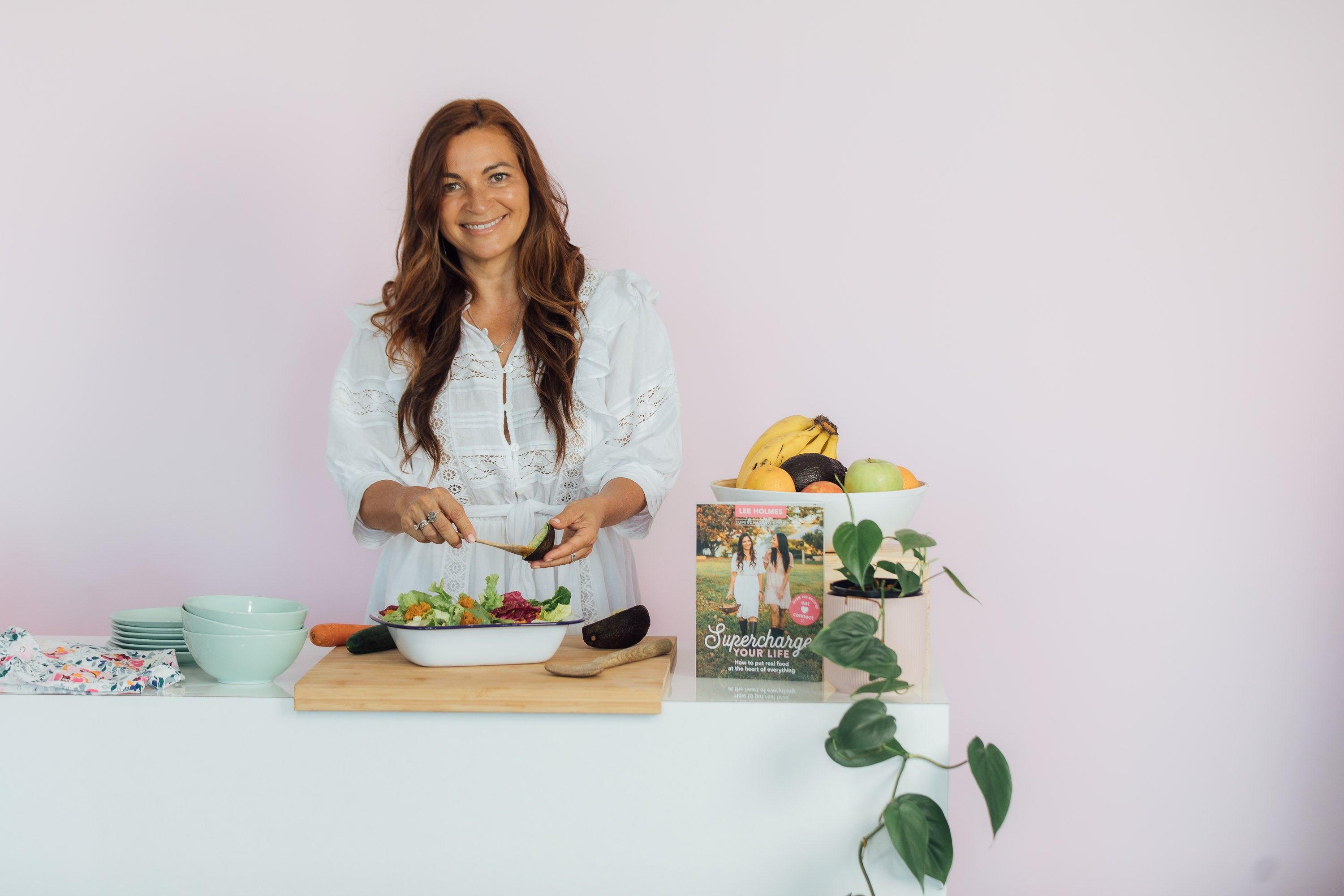
Microbiome Magazine Vol. 2: Full Text
By Lee Holmes, Clinical Nutritionist, author of 12 books and founder of Supercharged Food (since 2010) and Love Your Gut
Microbiome Magazine Vol. 2, The Clean Edition, is Lee Holmes' free guide to a gentle, food-first week of gut-friendly eating. Inside: why gut health matters for mood and energy, the high-fibre diet, a simple 7-day gut health meal plan, a beginner's guide to intermittent fasting and gut health, mindful eating, and eight easy recipes, from a green smoothie to a baked blueberry custard.
Get the full magazine free: the complete illustrated issue, including the printable 7-day planner, is a free PDF. Download Microbiome Magazine Vol. 2 and your link arrives by email straight away.
In this issue
- A letter from Lee
- That gut feeling: why gut health matters
- Why gut microbiome diversity is so important
- A gentle week of gut-friendly eating, the nutritionist way
- The high-five fibre diet: soluble and insoluble fibre explained
- Intermittent fasting and gut health: a beginner's guide
- A 7-day gut health meal plan
- Recipes
- Gut health questions, answered
A letter from Lee
Hello there, Lee here. Grab a herbal tea, settle in and welcome to the Clean Edition of Microbiome Magazine.
This issue is all about a gentle reset that doesn't involve crazy juice cleanses or living on air and good intentions. It's about simple, smart tweaks: more fibre, more plants, a sensible eating window and plenty of delicious food. This isn't about perfection; it's about progress. Small changes, made consistently, are what your gut loves most.
Lee x
That gut feeling: why gut health matters
If you've ever had butterflies before a big event, or felt your stomach twist during a stressful moment, you've felt the gut-brain connection in action. Your gut is often called your "second brain", and it plays a role well beyond digestion.
The gut-brain axis
The gut-brain axis is the two-way communication network between your digestive system and your brain, carried by the vagus nerve, hormones and chemical messengers. Around 90% of your body's serotonin, the "feel-good" messenger, is made in the gut rather than the brain. Your mood affects your gut, and your gut affects how you feel.
Your microbiome: an inner rainforest
Your gut microbiome is a bustling community of trillions of microbes, mostly living in your large intestine. Think of it as a mini rainforest, where variety is everything. These microbes help break down your food, make some B vitamins and short-chain fatty acids, and help train your immune system. Highly processed food, stress and unnecessary antibiotics can upset the balance, something called dysbiosis.
Why gut microbiome diversity is so important
Research consistently links a more diverse microbiome with better digestion and overall wellbeing. The easiest way to grow that diversity is on your plate: fill it with colourful vegetables, fruit, legumes, wholegrains, nuts, seeds and healthy fats. Fermented foods such as pickles (vegetables fermented in brine), kefir and kombucha bring live microbes too. If they're new to you, ease in gently, a spoonful at a time.
A gentle week of gut-friendly eating, the nutritionist way
Your body already has a sophisticated system for processing and clearing waste: your liver, kidneys and digestive tract do this every day. My approach isn't about "cleansing" or punishing yourself. It's about giving those systems what they need: whole foods, plenty of fibre and water, rest and a little less of the things that make life harder for your gut.
What makes this approach different
-
Gently does it. No crash diets or deprivation. Sustainable health comes from consistent, kind care.
-
Food first. Real, nutrient-dense, delicious food is the foundation.
-
Grounded in research. Practical steps based on nutrition science, not fads.
-
Small changes. Realistic tweaks that fit into your real life.
The three phases
-
Prepare. For a couple of days beforehand, cut back on highly processed food, alcohol, caffeine and added sugar. Stock up on fresh produce and batch-cook a soup or two.
-
Nourish. For seven days, build every meal around fibre-rich vegetables, legumes, wholegrains, healthy fats and quality protein, with plenty of water and herbal tea. Easy-to-digest soups and smoothies make it simple.
-
Maintain. Afterwards, slowly bring foods back and notice how you feel. Keep the habits you enjoyed: fermented foods, more plants and regular meal times.
What to expect
Cutting back on caffeine and sugar can bring a few headaches, cravings or tiredness in the first couple of days. Stay hydrated, rest and be kind to yourself. If you have a health condition, are pregnant or take medication, talk to your healthcare practitioner before changing how you eat.
Daily essentials
-
Morning ritual: a warm glass of water with a squeeze of lemon.
-
Soups and smoothies: rotate recipes for variety, with fibre, healthy fats and protein to keep you satisfied.
-
Snacks: simple whole foods such as avocado and tuna mash, eggs or a smoothie.
-
Mindful eating: sit down, chew slowly and enjoy the flavours and textures of your food.
-
Calm: journaling, meditation or a quiet walk outdoors. Stress affects digestion.
-
Sleep and movement: prioritise sleep, and choose gentle exercise such as yoga or walking.
Eat more plants
You'll often hear about "alkaline" eating. Your body keeps your blood's pH tightly controlled whatever you eat, so food can't change it. What the "alkaline" approach does get right is the plate: plenty of leafy greens, vegetables, fruit, legumes, nuts and seeds, and less ultra-processed food, refined sugar and processed meat. That's a pattern your gut bacteria love.
Dry skin brushing
Dry skin brushing is a simple self-care ritual from the Ayurvedic tradition. Before your shower, use a soft natural-bristle brush in long, gentle strokes towards your heart. It exfoliates dead skin cells and feels wonderfully invigorating, a lovely few minutes to yourself before the day begins.
The high-five fibre diet: soluble and insoluble fibre explained
When it comes to gut health, fibre is the unsung hero. Fibre is the part of plant food we can't fully digest, and that's exactly what makes it so valuable. Most Australians don't eat enough of it.
What fibre does for you
-
Feeds your good bacteria. Some fibres act as prebiotics, food for your beneficial microbes.
-
Keeps you regular. Fibre adds bulk and softness, helping things move comfortably.
-
Steadies energy. High-fibre foods release their sugars more slowly.
-
Keeps you full. Fibre helps you feel satisfied for longer.
Soluble vs insoluble fibre
Soluble fibre dissolves in water to form a gel. It feeds gut bacteria and helps steady blood sugar. Find it in oats, apples, citrus, beans, lentils, broccoli and chia seeds.
Insoluble fibre doesn't dissolve, and it adds bulk to help keep you regular. Find it in wholegrains, nuts, seeds and vegetables such as carrots.
How to eat more fibre without the bloat
-
Go slow. Add fibre-rich foods gradually over a few weeks so your gut can adjust.
-
Drink up. Fibre works best with plenty of water; aim for around 2 litres a day.
-
Mix it up. Eat a variety of fruit, vegetables, wholegrains, nuts, seeds and legumes.
-
Snack smart. Swap processed snacks for fruit, raw veggies or a small handful of nuts.
-
Choose whole. Swap white bread and pasta for wholemeal bread, brown rice and quinoa.
If you'd like an easy fibre top-up, I add a scoop of Love Your Gut Vegan Protein + Fibre Powder to my smoothies.
Intermittent fasting and gut health: a beginner's guide
I know quite a bit about fasting: I fast regularly and I've written a book on the topic. Intermittent fasting (IF) is an eating pattern that alternates periods of eating with periods of not eating. Rather than counting calories, it focuses on when you eat.
How intermittent fasting may support your gut
-
A break for digestion. Between meals, your gut runs a natural "housekeeping wave" called the migrating motor complex, which moves food remnants along. Longer gaps between meals give it time to work.
-
Microbial rhythms. Research suggests that time-restricted eating can influence the daily rhythms and make-up of gut bacteria.
-
Cellular renewal. Fasting periods are linked with autophagy, the body's natural clean-up and recycling process inside cells.
How to start intermittent fasting if you're busy
-
Start with 12 hours. For example, finish dinner at 7 pm and have breakfast at 7 am. Extend gradually if it suits you.
-
Try 16:8. Eat within an 8-hour window, such as lunch and dinner.
-
Or try 5:2. Eat normally five days a week, with two lighter days.
-
Hydrate. Water and herbal tea are fasting-friendly.
-
Make every meal count. Leafy greens, quality protein, healthy fats and fermented foods.
-
Prep ahead so nourishing meals are ready when your eating window opens.
-
Be flexible. Consistency over time matters more than being rigid every day.
What to expect when you start
Hunger pangs usually settle within the first week as your body adjusts. Some people feel tired or irritable at first. Many people find they settle into it more easily than expected. Fasting isn't suitable for everyone, including during pregnancy or breastfeeding, for people with a history of disordered eating, or for people on some medications, so check with your healthcare practitioner first.
A 7-day gut health meal plan
Here's a simple week of nourishing, fibre-rich meals. Start each morning with warm water and lemon (or a splash of apple cider vinegar), and wind down each evening with a caffeine-free herbal tea such as peppermint, chamomile or ginger.
-
Day 1: Green Renew Smoothie; Avocado and Almond Soup; a colourful vegetable stir-fry.
-
Day 2: Oats with berries; roasted pumpkin and cauliflower soup with vegetables; grilled fish with roasted vegetables.
-
Day 3: Berry Burst Smoothie; sardine mash with salad; one-pan roasted fish with vegetables.
-
Day 4: Coconut yoghurt with berries and flaxseed; cooked vegetable salad with chicken or tempeh; Salmon and Broccoli Bowl.
-
Day 5: Turmeric scrambled eggs on pumpernickel; salad with chicken or tempeh; Ratatouille Bowl, with Baked Blueberry Custard for dessert.
-
Day 6: Turmeric scrambled eggs; Garden Fresh Asparagus Soup; lamb and zucchini soup.
-
Day 7: Choc Mint Hot Chocolate and oats with cinnamon; salmon chowder; caponata.
Find more of my recipes at Supercharged Food.
Recipes
Green Renew Smoothie
Serves 1. A creamy, green, tummy-friendly start to the day.
- ½ large ripe avocado
- 350 g (1 bunch) English spinach leaves
- 1 small cucumber
- 2 celery stalks
- 250 ml (1 cup) coconut water
- 125 ml (½ cup) almond milk
- 1 tablespoon Love Your Gut Diatomaceous Earth (optional; it mixes in easily and has no taste)
Whizz everything in a blender until smooth.
Berry Burst Smoothie
Serves 2. Bright pink, full of berry polyphenols and lovely for breakfast or an afternoon snack.
- 375 ml (1½ cups) almond milk
- 125 ml (½ cup) additive-free coconut milk
- 80 g (½ cup) fresh or frozen mixed berries
- 1 tablespoon nut butter (optional)
- 1 tablespoon lemon juice
- 1 tablespoon Love Your Gut Diatomaceous Earth (optional)
Whizz everything in a blender until smooth.
Garden Fresh Asparagus Soup
Serves 4. I love the snap of bright-green new-season asparagus and its grassy sweetness.
- 2 tablespoons butter and 2 tablespoons extra virgin olive oil, plus extra to serve
- 2 spring onions, finely chopped, plus extra to serve
- ½ teaspoon curry powder, ¼ teaspoon ground ginger, ½ teaspoon ground turmeric
- Grated zest and juice of 1 lemon
- 2 medium turnips, peeled and diced
- 750 ml (3 cups) vegetable stock
- 270 ml tin additive-free coconut milk
- 175 g (1 bunch) asparagus, cut into 1.5 cm pieces
- ½ teaspoon sea salt and freshly cracked black pepper
Melt the butter with the oil in a large saucepan over medium heat and soften the spring onion. Add the spices, lemon zest and juice, and turnip, and cook for 5 minutes, stirring. Add the stock, coconut milk and asparagus and simmer, partly covered, for 15 minutes until the turnip is tender. Season, cool slightly and purée until smooth. Reheat gently and serve with a drizzle of olive oil and extra spring onion.
Avocado and Almond Soup
Serves 4. A chilled, Mexican-inspired soup that's big on flavour.
- 2 tablespoons extra virgin olive oil or butter
- 1 onion, chopped
- 2 ripe avocados
- 750 ml to 1 litre (3 to 4 cups) vegetable stock
- 125 ml (½ cup) almond milk
- 1 tablespoon grated lemon zest and juice of 1 lemon
- 1 teaspoon sweet paprika, ½ teaspoon ground cumin, a pinch of cayenne
- 1 garlic clove, crushed
- Sea salt, pepper, coriander and lime wedges to serve
Cook the onion in the oil for 3 to 4 minutes until browned. Blend with all the remaining ingredients except the coriander and lime until smooth. Chill, then serve with coriander and lime.
Salmon and Broccoli Bowl
Serves 1. Warm, filling and easy to digest.
- 1 small turnip, peeled and diced
- ½ head broccoli, cut into florets
- 100 g fresh salmon fillet, skinned and deboned
- 125 ml (½ cup) almond milk
Boil the turnip and broccoli for 8 to 10 minutes until tender, then drain. Poach the salmon in the almond milk, covered, over low heat for about 7 minutes until just cooked. Pulse the salmon, milk and vegetables in a food processor to your preferred texture.
Ratatouille Bowl
Serves 1. Silky eggplant in a steamy bowl of ratatouille.
- 1 tablespoon olive oil or butter, or 2 teaspoons ghee
- 1 spring onion, finely chopped
- 2 garlic cloves, crushed
- 1 zucchini, 1 red capsicum and ¼ small eggplant, diced
- 4 tomatoes, chopped
Soften the spring onion and garlic in the oil for 2 to 3 minutes. Add the remaining ingredients, cover and cook on low for 25 minutes until tender. Purée, or leave it chunky if your tummy is happy with that.
Baked Blueberry Custard
Serves 4. Soft, comforting and dairy-free.
- 400 ml tin additive-free coconut milk
- 4 organic egg yolks
- 1 teaspoon alcohol-free vanilla extract
- 155 g (1 cup) blueberries
Preheat the oven to 140°C. Warm the coconut milk. Whisk the yolks to ribbon stage, then slowly whisk in the warm milk over medium heat until it starts to thicken. Stir in the vanilla. Divide the blueberries between four ramekins, pour over the custard and bake in a water bath for 30 to 35 minutes until just wobbly. Cool, then chill.
Choc Mint Hot Chocolate
Serves 1. Best enjoyed in the morning as an occasional treat, as cacao can be energising.
- 2 teaspoons raw cacao powder
- ¼ teaspoon ground cinnamon
- ¼ teaspoon alcohol-free peppermint essence
- 125 ml (½ cup) almond milk and 125 ml (½ cup) additive-free coconut milk
Mix the cacao, cinnamon and peppermint with 2 tablespoons of the almond milk in a small saucepan over medium heat. Add the remaining milks and stir until warmed through.
Gut health questions, answered
What is the gut-brain axis?
It's the two-way communication network between your gut and your brain, carried by the vagus nerve, hormones and chemical messengers. It's why stress can upset your tummy, and why your gut can influence how you feel.
What's the difference between soluble and insoluble fibre?
Soluble fibre dissolves in water to form a gel and feeds your gut bacteria (oats, apples, legumes, chia). Insoluble fibre doesn't dissolve and adds bulk to help keep you regular (wholegrains, nuts, seeds, vegetables). You need both.
Is intermittent fasting good for gut health?
Research suggests regular gaps between meals can support your gut's natural housekeeping and its daily microbial rhythms. Start gently with a 12-hour overnight break, and check with your healthcare practitioner first if you have a health condition, take medication, or are pregnant or breastfeeding.
How can I eat more fibre without bloating?
Go slowly, adding fibre-rich foods over a few weeks, drink plenty of water and eat a wide variety of plants rather than a lot of one type.
About Lee Holmes
Lee Holmes, Clinical Nutritionist, author of 12 books and founder of Supercharged Food (since 2010) and Love Your Gut. Lee's latest book is Eat to Heal, and she co-hosts The Lee and Irene Show podcast with Clean Nectarine founder Irene Falcone. Read more about Lee.
Download your free copy: get the full illustrated Microbiome Magazine Vol. 2, with the printable 7-day planner, as a free PDF. Catch up on Vol. 1, read Vol. 3 next, or browse the Microbiome Magazine library.
This magazine shares general information about food and lifestyle. It isn't medical advice; talk to your healthcare practitioner about your own health.
By Lee Holmes, Clinical Nutritionist, author of 12 books and founder of Supercharged Food (since 2010) and Love Your Gut
Microbiome Magazine Vol. 2, The Clean Edition, is Lee Holmes' free guide to a gentle, food-first week of gut-friendly eating. Inside: why gut health matters for mood and energy, the high-fibre diet, a simple 7-day gut health meal plan, a beginner's guide to intermittent fasting and gut health, mindful eating, and eight easy recipes, from a green smoothie to a baked blueberry custard.
Get the full magazine free: the complete illustrated issue, including the printable 7-day planner, is a free PDF. Download Microbiome Magazine Vol. 2 and your link arrives by email straight away.
In this issue
- A letter from Lee
- That gut feeling: why gut health matters
- Why gut microbiome diversity is so important
- A gentle week of gut-friendly eating, the nutritionist way
- The high-five fibre diet: soluble and insoluble fibre explained
- Intermittent fasting and gut health: a beginner's guide
- A 7-day gut health meal plan
- Recipes
- Gut health questions, answered
A letter from Lee
Hello there, Lee here. Grab a herbal tea, settle in and welcome to the Clean Edition of Microbiome Magazine.
This issue is all about a gentle reset that doesn't involve crazy juice cleanses or living on air and good intentions. It's about simple, smart tweaks: more fibre, more plants, a sensible eating window and plenty of delicious food. This isn't about perfection; it's about progress. Small changes, made consistently, are what your gut loves most.
Lee x
That gut feeling: why gut health matters
If you've ever had butterflies before a big event, or felt your stomach twist during a stressful moment, you've felt the gut-brain connection in action. Your gut is often called your "second brain", and it plays a role well beyond digestion.
The gut-brain axis
The gut-brain axis is the two-way communication network between your digestive system and your brain, carried by the vagus nerve, hormones and chemical messengers. Around 90% of your body's serotonin, the "feel-good" messenger, is made in the gut rather than the brain. Your mood affects your gut, and your gut affects how you feel.
Your microbiome: an inner rainforest
Your gut microbiome is a bustling community of trillions of microbes, mostly living in your large intestine. Think of it as a mini rainforest, where variety is everything. These microbes help break down your food, make some B vitamins and short-chain fatty acids, and help train your immune system. Highly processed food, stress and unnecessary antibiotics can upset the balance, something called dysbiosis.
Why gut microbiome diversity is so important
Research consistently links a more diverse microbiome with better digestion and overall wellbeing. The easiest way to grow that diversity is on your plate: fill it with colourful vegetables, fruit, legumes, wholegrains, nuts, seeds and healthy fats. Fermented foods such as pickles (vegetables fermented in brine), kefir and kombucha bring live microbes too. If they're new to you, ease in gently, a spoonful at a time.
A gentle week of gut-friendly eating, the nutritionist way
Your body already has a sophisticated system for processing and clearing waste: your liver, kidneys and digestive tract do this every day. My approach isn't about "cleansing" or punishing yourself. It's about giving those systems what they need: whole foods, plenty of fibre and water, rest and a little less of the things that make life harder for your gut.
What makes this approach different
- Gently does it. No crash diets or deprivation. Sustainable health comes from consistent, kind care.
- Food first. Real, nutrient-dense, delicious food is the foundation.
- Grounded in research. Practical steps based on nutrition science, not fads.
- Small changes. Realistic tweaks that fit into your real life.
The three phases
- Prepare. For a couple of days beforehand, cut back on highly processed food, alcohol, caffeine and added sugar. Stock up on fresh produce and batch-cook a soup or two.
- Nourish. For seven days, build every meal around fibre-rich vegetables, legumes, wholegrains, healthy fats and quality protein, with plenty of water and herbal tea. Easy-to-digest soups and smoothies make it simple.
- Maintain. Afterwards, slowly bring foods back and notice how you feel. Keep the habits you enjoyed: fermented foods, more plants and regular meal times.
What to expect
Cutting back on caffeine and sugar can bring a few headaches, cravings or tiredness in the first couple of days. Stay hydrated, rest and be kind to yourself. If you have a health condition, are pregnant or take medication, talk to your healthcare practitioner before changing how you eat.
Daily essentials
- Morning ritual: a warm glass of water with a squeeze of lemon.
- Soups and smoothies: rotate recipes for variety, with fibre, healthy fats and protein to keep you satisfied.
- Snacks: simple whole foods such as avocado and tuna mash, eggs or a smoothie.
- Mindful eating: sit down, chew slowly and enjoy the flavours and textures of your food.
- Calm: journaling, meditation or a quiet walk outdoors. Stress affects digestion.
- Sleep and movement: prioritise sleep, and choose gentle exercise such as yoga or walking.
Eat more plants
You'll often hear about "alkaline" eating. Your body keeps your blood's pH tightly controlled whatever you eat, so food can't change it. What the "alkaline" approach does get right is the plate: plenty of leafy greens, vegetables, fruit, legumes, nuts and seeds, and less ultra-processed food, refined sugar and processed meat. That's a pattern your gut bacteria love.
Dry skin brushing
Dry skin brushing is a simple self-care ritual from the Ayurvedic tradition. Before your shower, use a soft natural-bristle brush in long, gentle strokes towards your heart. It exfoliates dead skin cells and feels wonderfully invigorating, a lovely few minutes to yourself before the day begins.
The high-five fibre diet: soluble and insoluble fibre explained
When it comes to gut health, fibre is the unsung hero. Fibre is the part of plant food we can't fully digest, and that's exactly what makes it so valuable. Most Australians don't eat enough of it.
What fibre does for you
- Feeds your good bacteria. Some fibres act as prebiotics, food for your beneficial microbes.
- Keeps you regular. Fibre adds bulk and softness, helping things move comfortably.
- Steadies energy. High-fibre foods release their sugars more slowly.
- Keeps you full. Fibre helps you feel satisfied for longer.
Soluble vs insoluble fibre
Soluble fibre dissolves in water to form a gel. It feeds gut bacteria and helps steady blood sugar. Find it in oats, apples, citrus, beans, lentils, broccoli and chia seeds.
Insoluble fibre doesn't dissolve, and it adds bulk to help keep you regular. Find it in wholegrains, nuts, seeds and vegetables such as carrots.
How to eat more fibre without the bloat
- Go slow. Add fibre-rich foods gradually over a few weeks so your gut can adjust.
- Drink up. Fibre works best with plenty of water; aim for around 2 litres a day.
- Mix it up. Eat a variety of fruit, vegetables, wholegrains, nuts, seeds and legumes.
- Snack smart. Swap processed snacks for fruit, raw veggies or a small handful of nuts.
- Choose whole. Swap white bread and pasta for wholemeal bread, brown rice and quinoa.
If you'd like an easy fibre top-up, I add a scoop of Love Your Gut Vegan Protein + Fibre Powder to my smoothies.
Intermittent fasting and gut health: a beginner's guide
I know quite a bit about fasting: I fast regularly and I've written a book on the topic. Intermittent fasting (IF) is an eating pattern that alternates periods of eating with periods of not eating. Rather than counting calories, it focuses on when you eat.
How intermittent fasting may support your gut
- A break for digestion. Between meals, your gut runs a natural "housekeeping wave" called the migrating motor complex, which moves food remnants along. Longer gaps between meals give it time to work.
- Microbial rhythms. Research suggests that time-restricted eating can influence the daily rhythms and make-up of gut bacteria.
- Cellular renewal. Fasting periods are linked with autophagy, the body's natural clean-up and recycling process inside cells.
How to start intermittent fasting if you're busy
- Start with 12 hours. For example, finish dinner at 7 pm and have breakfast at 7 am. Extend gradually if it suits you.
- Try 16:8. Eat within an 8-hour window, such as lunch and dinner.
- Or try 5:2. Eat normally five days a week, with two lighter days.
- Hydrate. Water and herbal tea are fasting-friendly.
- Make every meal count. Leafy greens, quality protein, healthy fats and fermented foods.
- Prep ahead so nourishing meals are ready when your eating window opens.
- Be flexible. Consistency over time matters more than being rigid every day.
What to expect when you start
Hunger pangs usually settle within the first week as your body adjusts. Some people feel tired or irritable at first. Many people find they settle into it more easily than expected. Fasting isn't suitable for everyone, including during pregnancy or breastfeeding, for people with a history of disordered eating, or for people on some medications, so check with your healthcare practitioner first.
A 7-day gut health meal plan
Here's a simple week of nourishing, fibre-rich meals. Start each morning with warm water and lemon (or a splash of apple cider vinegar), and wind down each evening with a caffeine-free herbal tea such as peppermint, chamomile or ginger.
- Day 1: Green Renew Smoothie; Avocado and Almond Soup; a colourful vegetable stir-fry.
- Day 2: Oats with berries; roasted pumpkin and cauliflower soup with vegetables; grilled fish with roasted vegetables.
- Day 3: Berry Burst Smoothie; sardine mash with salad; one-pan roasted fish with vegetables.
- Day 4: Coconut yoghurt with berries and flaxseed; cooked vegetable salad with chicken or tempeh; Salmon and Broccoli Bowl.
- Day 5: Turmeric scrambled eggs on pumpernickel; salad with chicken or tempeh; Ratatouille Bowl, with Baked Blueberry Custard for dessert.
- Day 6: Turmeric scrambled eggs; Garden Fresh Asparagus Soup; lamb and zucchini soup.
- Day 7: Choc Mint Hot Chocolate and oats with cinnamon; salmon chowder; caponata.
Find more of my recipes at Supercharged Food.
Recipes
Green Renew Smoothie
Serves 1. A creamy, green, tummy-friendly start to the day.
- ½ large ripe avocado
- 350 g (1 bunch) English spinach leaves
- 1 small cucumber
- 2 celery stalks
- 250 ml (1 cup) coconut water
- 125 ml (½ cup) almond milk
- 1 tablespoon Love Your Gut Diatomaceous Earth (optional; it mixes in easily and has no taste)
Whizz everything in a blender until smooth.
Berry Burst Smoothie
Serves 2. Bright pink, full of berry polyphenols and lovely for breakfast or an afternoon snack.
- 375 ml (1½ cups) almond milk
- 125 ml (½ cup) additive-free coconut milk
- 80 g (½ cup) fresh or frozen mixed berries
- 1 tablespoon nut butter (optional)
- 1 tablespoon lemon juice
- 1 tablespoon Love Your Gut Diatomaceous Earth (optional)
Whizz everything in a blender until smooth.
Garden Fresh Asparagus Soup
Serves 4. I love the snap of bright-green new-season asparagus and its grassy sweetness.
- 2 tablespoons butter and 2 tablespoons extra virgin olive oil, plus extra to serve
- 2 spring onions, finely chopped, plus extra to serve
- ½ teaspoon curry powder, ¼ teaspoon ground ginger, ½ teaspoon ground turmeric
- Grated zest and juice of 1 lemon
- 2 medium turnips, peeled and diced
- 750 ml (3 cups) vegetable stock
- 270 ml tin additive-free coconut milk
- 175 g (1 bunch) asparagus, cut into 1.5 cm pieces
- ½ teaspoon sea salt and freshly cracked black pepper
Melt the butter with the oil in a large saucepan over medium heat and soften the spring onion. Add the spices, lemon zest and juice, and turnip, and cook for 5 minutes, stirring. Add the stock, coconut milk and asparagus and simmer, partly covered, for 15 minutes until the turnip is tender. Season, cool slightly and purée until smooth. Reheat gently and serve with a drizzle of olive oil and extra spring onion.
Avocado and Almond Soup
Serves 4. A chilled, Mexican-inspired soup that's big on flavour.
- 2 tablespoons extra virgin olive oil or butter
- 1 onion, chopped
- 2 ripe avocados
- 750 ml to 1 litre (3 to 4 cups) vegetable stock
- 125 ml (½ cup) almond milk
- 1 tablespoon grated lemon zest and juice of 1 lemon
- 1 teaspoon sweet paprika, ½ teaspoon ground cumin, a pinch of cayenne
- 1 garlic clove, crushed
- Sea salt, pepper, coriander and lime wedges to serve
Cook the onion in the oil for 3 to 4 minutes until browned. Blend with all the remaining ingredients except the coriander and lime until smooth. Chill, then serve with coriander and lime.
Salmon and Broccoli Bowl
Serves 1. Warm, filling and easy to digest.
- 1 small turnip, peeled and diced
- ½ head broccoli, cut into florets
- 100 g fresh salmon fillet, skinned and deboned
- 125 ml (½ cup) almond milk
Boil the turnip and broccoli for 8 to 10 minutes until tender, then drain. Poach the salmon in the almond milk, covered, over low heat for about 7 minutes until just cooked. Pulse the salmon, milk and vegetables in a food processor to your preferred texture.
Ratatouille Bowl
Serves 1. Silky eggplant in a steamy bowl of ratatouille.
- 1 tablespoon olive oil or butter, or 2 teaspoons ghee
- 1 spring onion, finely chopped
- 2 garlic cloves, crushed
- 1 zucchini, 1 red capsicum and ¼ small eggplant, diced
- 4 tomatoes, chopped
Soften the spring onion and garlic in the oil for 2 to 3 minutes. Add the remaining ingredients, cover and cook on low for 25 minutes until tender. Purée, or leave it chunky if your tummy is happy with that.
Baked Blueberry Custard
Serves 4. Soft, comforting and dairy-free.
- 400 ml tin additive-free coconut milk
- 4 organic egg yolks
- 1 teaspoon alcohol-free vanilla extract
- 155 g (1 cup) blueberries
Preheat the oven to 140°C. Warm the coconut milk. Whisk the yolks to ribbon stage, then slowly whisk in the warm milk over medium heat until it starts to thicken. Stir in the vanilla. Divide the blueberries between four ramekins, pour over the custard and bake in a water bath for 30 to 35 minutes until just wobbly. Cool, then chill.
Choc Mint Hot Chocolate
Serves 1. Best enjoyed in the morning as an occasional treat, as cacao can be energising.
- 2 teaspoons raw cacao powder
- ¼ teaspoon ground cinnamon
- ¼ teaspoon alcohol-free peppermint essence
- 125 ml (½ cup) almond milk and 125 ml (½ cup) additive-free coconut milk
Mix the cacao, cinnamon and peppermint with 2 tablespoons of the almond milk in a small saucepan over medium heat. Add the remaining milks and stir until warmed through.
Gut health questions, answered
What is the gut-brain axis?
It's the two-way communication network between your gut and your brain, carried by the vagus nerve, hormones and chemical messengers. It's why stress can upset your tummy, and why your gut can influence how you feel.
What's the difference between soluble and insoluble fibre?
Soluble fibre dissolves in water to form a gel and feeds your gut bacteria (oats, apples, legumes, chia). Insoluble fibre doesn't dissolve and adds bulk to help keep you regular (wholegrains, nuts, seeds, vegetables). You need both.
Is intermittent fasting good for gut health?
Research suggests regular gaps between meals can support your gut's natural housekeeping and its daily microbial rhythms. Start gently with a 12-hour overnight break, and check with your healthcare practitioner first if you have a health condition, take medication, or are pregnant or breastfeeding.
How can I eat more fibre without bloating?
Go slowly, adding fibre-rich foods over a few weeks, drink plenty of water and eat a wide variety of plants rather than a lot of one type.
About Lee Holmes
Lee Holmes, Clinical Nutritionist, author of 12 books and founder of Supercharged Food (since 2010) and Love Your Gut. Lee's latest book is Eat to Heal, and she co-hosts The Lee and Irene Show podcast with Clean Nectarine founder Irene Falcone. Read more about Lee.
Download your free copy: get the full illustrated Microbiome Magazine Vol. 2, with the printable 7-day planner, as a free PDF. Catch up on Vol. 1, read Vol. 3 next, or browse the Microbiome Magazine library.
This magazine shares general information about food and lifestyle. It isn't medical advice; talk to your healthcare practitioner about your own health.