

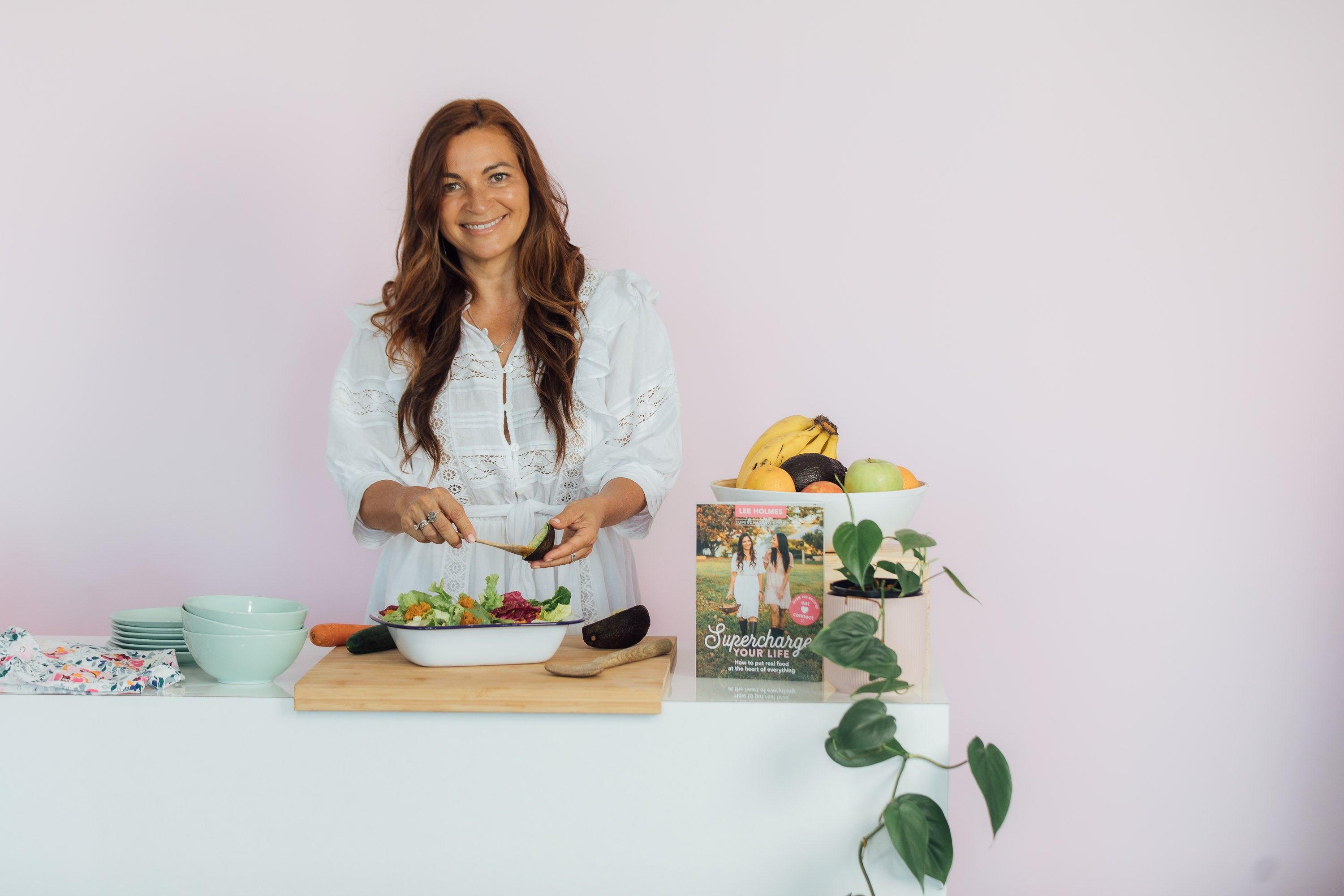
By Lee Holmes, Clinical Nutritionist, author of 12 books and founder of Supercharged Food (since 2010) and Love Your Gut
If you've spent an afternoon with a tummy that feels like a balloon, you're in good company. Bloating is one of the most common gut complaints I hear about, and the good news is that most everyday bloating comes back to a handful of things you can change in your kitchen and your daily routine. In this guide I'll walk you through what causes bloating, the three types and how to spot yours, the foods that help, and my five daily steps to what I like to call an iron gut: a gut that copes calmly with busy weeks, travel and the odd festive feast.
Want it on one page? Download my free Bloat-Free Blueprint, a printable guide with the three bloat types, ten foods to try and my daily habits.
Key takeaways
- Most everyday bloating comes from four things: stress, meal timing, fermentable foods (FODMAPs) and an unbalanced mix of gut bacteria.
- There are three common types of bloat: gas and fermentation, sluggish and heavy, and water retention. Each one responds to different habits.
- Kiwifruit, fennel, cooked greens, chia, berries, ginger and peppermint tea are some of my favourite foods to reach for.
- Five daily habits build an iron gut: hydration, varied fibre, fermented foods, slow chewing and a calm, consistent morning routine.
- Bloating that's persistent, painful or comes with other symptoms is worth a chat with your GP.
In this guide
- What causes bloating?
- The 3 types of bloating, and how to spot yours
- Foods that help with bloating
- Common bloating triggers
- 5 steps to an iron gut
- How to handle festive and holiday bloat
- How I use Love Your Gut in my routine
- Bloating questions, answered
What causes bloating?
Bloating is that tight, full, puffy feeling in your tummy, sometimes with gas, sometimes without. Occasional bloating after a big meal is completely normal. When it shows up most days, it's usually a signal that something in your routine needs a little attention. These are the four causes I see most often.
1. Stress
When you're stressed, your nervous system shifts into "fight or flight" mode and quietly tells your digestion to take a back seat. Food moves through more slowly and has more time to ferment, which means more gas. Your gut and brain are in constant conversation (the gut-brain axis), so calming one helps the other. I've written more about this in The Cortisol-Gut Connection.
Try this: before you eat, sit down and take three slow breaths, in for four counts and out for six. It's a simple signal to your body that it's safe to rest and digest.
2. Meal timing
Your gut has a daily rhythm, just like your sleep. It's at its busiest earlier in the day and winds down in the evening. A big, heavy dinner eaten late gives food more time to sit and ferment overnight.
Try this: make breakfast and lunch your bigger meals, keep dinner lighter (vegetables, protein and healthy fats) and aim to finish eating two to three hours before bed.
3. Fermentable foods (FODMAPs)
FODMAPs (fermentable oligosaccharides, disaccharides, monosaccharides and polyols) are carbohydrates that some people's gut bacteria ferment quickly, producing gas. Common high-FODMAP foods include onion, garlic, wheat, rye, legumes, stone fruit, cauliflower, mushrooms and sugar alcohols such as sorbitol and xylitol. These are healthy foods, so the goal isn't to cut them out forever. If you suspect FODMAPs, work with a dietitian or nutritionist on a short, structured elimination and reintroduction to find your personal triggers.
4. An unbalanced gut microbiome
Your gut is home to trillions of bacteria. When the mix gets out of balance (called dysbiosis), food can ferment more intensely and you may notice gas and bloating more easily. Low fibre, ultra-processed food, stress, poor sleep and antibiotics can all upset the balance. The fix is mostly on your plate: a wide variety of plants, fermented foods and fibre, built up gradually.
The 3 types of bloating, and how to spot yours
Not all bloating feels the same. Spotting your type helps you choose the right habits.
Type 1: Gas and fermentation bloat
- Feels like: tight, gassy, burpy and distended after meals.
- Often linked to: eating quickly, fizzy drinks and high-FODMAP foods.
- Try: chewing well, swapping fizzy drinks for still water or peppermint tea, and noticing whether onion, garlic or sugar alcohols set you off.
Type 2: Sluggish, heavy bloat
- Feels like: slow and heavy, often on days when you're tired or run down.
- Often linked to: processed food, alcohol, stress, low fibre and late-night meals.
- Try: more colourful plants and fibre, earlier and lighter dinners, and a walk after meals.
Type 3: Water retention bloat
- Feels like: puffiness around the tummy (and sometimes the face) that changes from day to day.
- Often linked to: hormonal changes across the month, salty food and not drinking enough water.
- Try: potassium-rich foods such as avocado and banana, plenty of water, gentle movement and less salty takeaway.
Foods that help with bloating
These are the ten foods I reach for most when my tummy needs some love.
- Kiwifruit: contains a natural enzyme called actinidin, and two kiwifruit a day is a well-studied habit for comfortable digestion.
- Fennel: traditionally used to settle the tummy. Try it shaved into salads or roasted.
- Ginger: keep a knob in your kitchen and pour hot water over a few slices for a warming tea.
- Peppermint tea: a soothing, caffeine-free cup after meals.
- Cooked greens: often gentler on the gut than a big raw salad, and rich in magnesium.
- Chia seeds: fibre and gentle bulk. Soak them first and drink plenty of water.
- Slightly green bananas: a source of resistant starch, which feeds your good bacteria.
- Avocado: rich in potassium, which helps balance sodium.
- Berries: lower in FODMAPs than many fruits and full of polyphenols your gut bacteria love.
- Turmeric: a golden spice I add to everything from eggs to dahl, with a pinch of black pepper.
Lemon in warm water first thing is a lovely ritual too. Looking for a sweet treat? Try my No Bloat Oat Cookies.
Common bloating triggers
- Fizzy drinks and chewing gum: both add swallowed air.
- Raw onion and garlic: try smaller amounts, well cooked, or swap in the green tops of spring onions, chives or a pinch of asafoetida.
- Sugar alcohols: sorbitol, xylitol and other "-ols" in sugar-free lollies and gum.
- Some packaged "healthy" snacks: check muesli and protein bars for soy protein isolate and added fibres such as inulin, which bother some people.
- Some long-life nut milks: look for brands without added gums and thickeners, or make your own.
- Legumes: start with small portions, soak and rinse them well, and build up slowly so your gut can adjust.
- Big, late, rushed meals: slow down and eat earlier where you can.
5 steps to an iron gut
An iron gut (some call it a gut of steel or a cast-iron stomach) isn't something you're born with. It's built, one daily habit at a time. These are the five foundations I come back to.
Step 1: Hydrate from the moment you wake
Your gut needs fluid to keep things moving comfortably and to maintain the protective mucus layer along its lining. Start the day with a big glass of warm water, then sip steadily through the day rather than gulping lots at once. Herbal teas count. If you drink coffee or black tea, match each cup with an extra glass of water.
Step 2: Eat a wide variety of fibre
Fibre is food for your gut bacteria, and variety matters as much as quantity. Most Australians eat around 20 g of fibre a day against a recommended 25 to 30 g. Aim for 30 different plant foods a week: pears, kiwifruit, avocado, oats, lentils, chickpeas, chia, flaxseed, leafy greens, broccoli and more. If you're increasing fibre, go slowly over a few weeks and drink plenty of water so your gut can adjust.

When my plate needs a hand
Love Your Gut All The Fibres
Five fibres from five whole foods in every spoonful: soluble, insoluble, prebiotic, fermentable and resistant starch, with no psyllium or inulin. I stir a spoonful into porridge, yoghurt or a smoothie. Start with a teaspoon and build up, with plenty of water.
Step 3: Add pre and probiotics every day
Probiotics are live beneficial bacteria; prebiotics are the fibres that feed them. Fermented foods such as yoghurt, kefir, sauerkraut, kimchi and kombucha bring live microbes, and onion, leeks, oats, asparagus and slightly green bananas bring prebiotic fibre. Consistency is the secret: a spoonful every day does more than a big serve once a week.
Step 4: Chew, chew, chew
Digestion starts in your mouth. Saliva contains enzymes that begin breaking down carbohydrates, and well-chewed food is much easier for your stomach to handle. Chew each mouthful until it loses its texture (for many people that's around 30 chews), put your fork down between bites and eat away from screens. It feels slow at first, then it becomes automatic.
Step 5: Keep a calm, consistent routine
Your gut loves rhythm. Regular meal times, a ten-minute walk after meals, good sleep and a few minutes of breathing or stretching each day all help your digestion settle into a steady pattern. My own mornings start with warm water, a few minutes of quiet and a walk.
How to handle festive and holiday bloat
Christmas lunch, Boxing Day leftovers, a long weekend away: it's okay to enjoy yourself. There's no need to punish yourself with a strict diet or a "cleanse" afterwards. Instead:
- In the lead-up, keep your fibre, water and fermented foods up.
- On the day, eat slowly, go easy on the fizz, and take a walk between courses.
- The day after, keep meals simple and nourishing: a berry and avocado smoothie bowl, a warming soup, plenty of water and herbal tea.
- Travelling? Pack peppermint tea bags, keep up your water and keep your morning routine as normal as you can.
How I use Love Your Gut in my routine
Food always comes first for me. These are the Love Your Gut products I've created and how I fit them into my day.
- Love Your Gut Diatomaceous Earth: a single-ingredient, food-grade silica powder with no taste. I stir a teaspoon into a glass of water first thing in the morning, followed by a second glass of water.
- Love Your Gut All The Fibres: five fibres from five whole foods. A spoonful goes into my porridge or smoothie on days my plate needs a hand.
- Love Your Gut Synbiotic: a powder combining probiotic strains with acacia prebiotic fibre, digestive enzymes and fruits such as acerola cherry and Kakadu plum. I add it to a cold smoothie or yoghurt.
- Love Your Gut Fulvic Humic Concentrate: I add a few drops to my water bottle through the day.
- Love Your Gut Golden Gut Blend: turmeric and spices that I stir into lattes, eggs and dahl.

Part of my morning
Love Your Gut Diatomaceous Earth
One ingredient: food-grade freshwater diatomaceous earth. Tasteless, and it stirs easily into water, juice or a smoothie. Available as a powder or capsules. Start low, build slowly and always drink plenty of water.
Read the label and follow the directions for use, and check with your healthcare practitioner before starting anything new, particularly if you're pregnant, breastfeeding or taking medication.
Bloating questions, answered
What causes bloating?
The most common everyday causes are stress, eating large or late meals, eating quickly, fizzy drinks, fermentable foods (FODMAPs) and an unbalanced mix of gut bacteria. Hormonal changes and salty food can also cause water retention bloat.
What foods help with bloating?
Kiwifruit, fennel, ginger, peppermint tea, cooked greens, soaked chia, slightly green bananas, avocado, berries and turmeric are good places to start, alongside plenty of water.
How do I get an iron gut or a stomach of steel?
Build five daily habits: hydrate well, eat a wide variety of fibre (aim for 30 plants a week), include fermented and prebiotic foods every day, chew thoroughly, and keep a calm, regular routine. Consistency over weeks matters more than perfection on any one day.
How long does it take to reduce bloating?
Some changes, such as eating more slowly or cutting fizzy drinks, can make a difference quickly. Changes to your gut bacteria build over several weeks of consistent habits.
When should I see a doctor about bloating?
See your GP if bloating is persistent or getting worse, or if it comes with pain, unexplained weight loss, a change in bowel habits, bleeding, vomiting or fever. Bloating that doesn't settle with diet and lifestyle changes is always worth checking.
Free guides to keep going
- Lee's Bloat-Free Blueprint: the three bloat types, ten foods and my daily habits on one printable page.
- Microbiome Magazine: my free magazine on gut health, with recipes in every issue. The fibre and gentle-eating issue is a great next read.
Further reading
- Natural Constipation Relief: Lee's Guide to Staying Regular
- The Cortisol-Gut Connection: Why Stress Might Be Bloating Your Belly
- No Bloat Oat Cookies
- How to Use Your Golden Gut Blend
This article shares general information about food and lifestyle. It isn't medical advice; talk to your healthcare practitioner about your own health.

Written by
Lee Holmes, Clinical Nutritionist
Lee is a clinical nutritionist, the author of 12 books including Eat to Heal, and the founder of Supercharged Food (since 2010) and the Love Your Gut range.


Leave a comment